
Nu door de aanhoudende lockdown ook mijn uitgeversavontuur in de vriesstand staat, heb ik mezelf een ietwat verlaat verjaardagscadeau gedaan door één van mijn verhalen in eigen beheer met een kleine oplage via voorinschrijving te laten drukken.
Wel, het is eigenlijk niet één verhaal, het zijn er drie, gebundeld in één dikke roman. De reden is simpel: de opstartkosten per titel zijn hoog en die haal je er pas uit bij een vrij hoge oplage, dus deze opstartkosten één keer of drie keer te moeten betalen maakt nogal een verschil. Daarnaast is de roman qua dikte nu ook meer vergelijkbaar met de andere delen in de Kingston Dances serie, hoewel het wel de allerdikste tot nu toe wordt met ruim 1000 pagina’s.
Het boek valt dus in de Kingston Dances serie, maar gaat niet over Damien Kingston. In plaats daarvan gaat hij over zijn vader, grootmoeder en overgrootvader.
French & Indian War
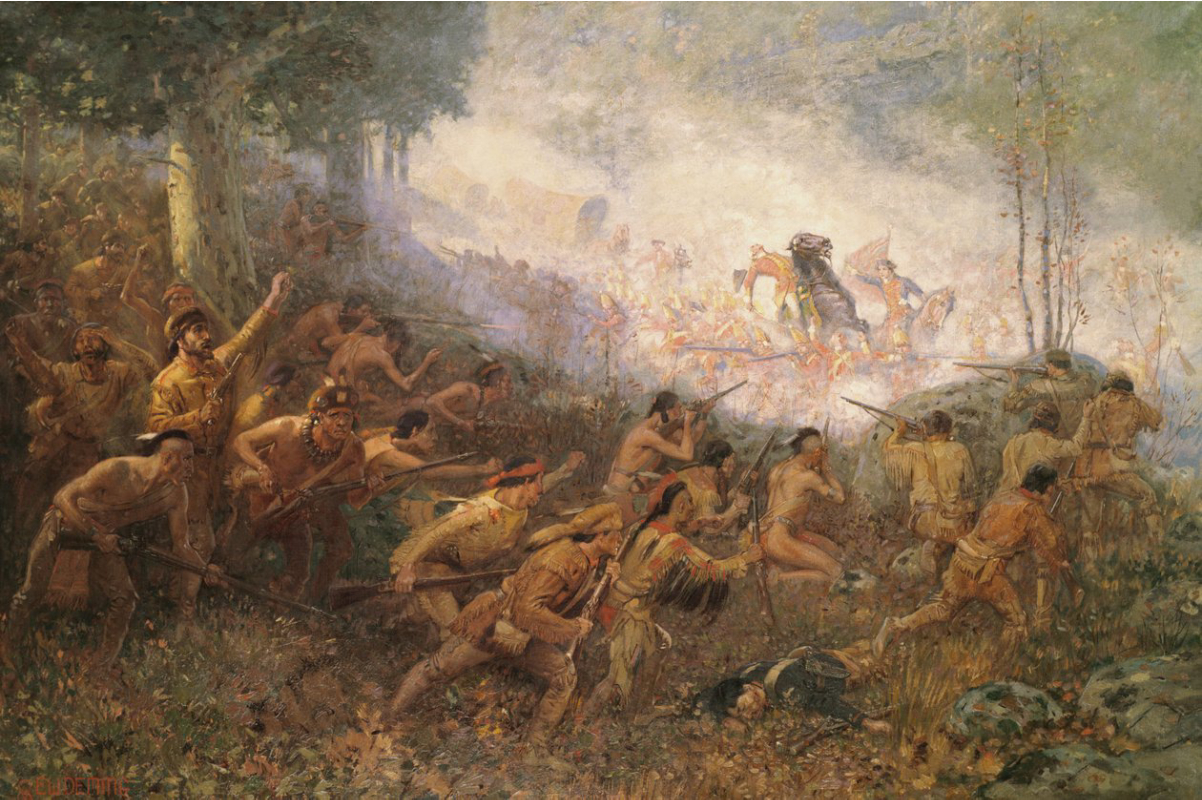
Het eerste verhaal heet Ohio Menuet – Sneeuwschoenen en Lelies en speelt zich af tijdens de French & Indian War in het midden van de 18e eeuw. De titel slaat op de streek waar de oorlog feitelijk om ging en de subtitel op de twee strijdende partijen: sneeuwschoenen voor de Amerikaanse rangers en lelies voor de Franse koninklijke troepen, beide aangevuld met Native stammen.
Ik had nooit interesse in deze oorlog. Ik had wel eens de film The Last of the Mohicans gezien, die tijdens deze oorlog speelt, maar meer ook niet. Feitelijk had ik ook geen enkele voorkennis voor ik aan mijn research begon.
Ik kwam erop doordat ik bij ander research op een stukje stuitte dat mijn interesse wekte. En toen bleek die oorlog heel wat interessanter dan ik van tevoren had gedacht. Het was geen oorlog, zoals gebruikelijk in die tijden. Er waren geen grote veldslagen met enorme troepenbewegingen op open terrein. Het dichte Amerikaanse woud, verstoken van fatsoenlijke wegen, stond manoeuvreren op grote schaal niet toe. In plaats daarvan waren het over het algemeen tamelijk kleine gevechten en schermutselingen die meer weg hadden van hinderlagen en guerrilla en waarbij de inbreng van de Indianen een grote rol speelde.
Het terrein en de geallieerde tegenstander aan beide zijden (de Native Americans) heeft de Amerikaanse stijl van vechten in die eeuw danig beïnvloed en deze oorlog zag de geboorte van de rangers. Robert Rogers’ 28 “Rules of Ranging” uit 1757 worden tot op de dag van vandaag gedoceerd aan US soldaten in de Ranger School.
De Engelsen waren in eerste instantie achterdochtig en terughoudend waar het ‘ranging’ betrof. Maar aangezien de Fransen deze stijl van vechten veel meer omarmden en in het begin wonnen, gingen ze overstag.
De hoofdpersoon is Brandon Picton, Damiens overgrootvader. Hij is de zoon van een blanke bonthandelaar en een Indiaanse vrouw, maar woont in Williamsburg.
Amerikaanse Revolutie
Toen ik dit verhaal geschreven had, wilde ik eigenlijk het gat met Damien Kingston overbruggen en daarom begon ik aan Yorktown Jig – De Zwarte Kokarde, dat zich afspeelt tijdens de Amerikaanse Revolutie. Yorktown was uiteraard de plek waar de Engelsen zich overgaven en de oorlog verloren en kokardes waren in die tijd zeer kenmerkend voor zowel burgers als soldaten om hun loyaliteit, land van herkomst of legerrang te tonen.
Ook de Amerikaanse Revolutie had tot dat moment mijn interesse nooit zo gehad. Ook hier bleef het beperkt tot een paar films en een boek: Revolution, Drums Along the Mohawk, The Patriot en Redcoat. Ik moest dan ook flink onderzoek doen.
Hoewel ik deze oorlog lang zo interessant niet vond als de vorige, boeide het geheel me toch meer dan ik van tevoren had gedacht. Vooral de spanningen tussen de aanhangers en tegenstanders van de revolutie spraken me aan.
Het verhaal heeft dan ook niet één hoofdpersoon, maar twee: Damiens grootouders. Zijn grootvader Walter Kingston sr. is een loyalist, zijn grootmoeder Claire Picton een patriot, en dat leidt uiteraard tot de nodige conflicten.
Oorlog van 1812
Het derde verhaal heet Chickahominy Cotillon – De Held van 1814 en speelt zich af tussen 1793 en 1831 en gaat over het leven van Damiens beruchte vader Walter Kingston jr. De subtitel slaat op de Oorlog van 1812, hoewel die maar een klein deel van het verhaal dekt.
Ik moest nu wel een nieuwe titel verzinnen voor de drie boeken tezamen en daarbij moest ik wel in de stijl blijven, dus een dans met een subtitel. Het is uiteindelijk geworden Appalachian Wardance – Long Rifle, Tomahawk en Bajonet. Ik heb gekozen voor wardance, omdat drie verschillende oorlogen een belangrijke plek in de verhalen innemen en het is meteen een referentie naar de Native inmenging en invloed in die oorlogen. De strijdende partijen komen terug in de subtitel: de long rifle was het kenmerkende wapen van de Amerikaanse kolonist, de tomahawk uiteraard van de natives en de bajonet voornamelijk van de Franse en Engelse (en Hessische) beroepssoldaten, hoewel reguliere Amerikaanse troepen die ook bij zich droegen.
Ik heb lang moeten dubben over een cover. Ik heb drie kokardes gemaakt, voor elk verhaal één, in de kleuren van de Engelsen, Fransen en Amerikanen. De gekleurde ceintuur staat voor de invloeden van de Native Americans op de manier van vechten van de Amerikanen en de kleding van de rangers. Liever had ik een echte ceinture fléchée gehad, maar de mooie wollen waren nogal prijzig, dus moet deze trapperceintuur maar volstaan. Benen waaiers werden graag gebruikt in die tijd en deze doet eer aan de niet geringe rol van Damiens grootmoeder in het middelste verhaal. De groene, wollen stof staat voor de rangereenheden van de Amerikanen.
Nu ik feitelijk de Amerikaanse ontstaansgeschiedenis van 1750 tot 1890 heb gecoverd met romans, wil ik eigenlijk nog één verhaal schrijven over een niet belangrijk onderdeel hiervan dat hieraan vooraf ging: de periode van de woudlopers en de conflicten tussen de Fransen en Engelsen, tussen Nouvelle France en New England over de beverbonthandel. Interessant materiaal is genoeg voor handen, nu nog een plot dat erbij past verzinnen.
Maar dat heeft tijd, want nu hoop ik eerst de serie over Gwide af kan maken.
Uncharted waters
Now that my publishing adventure is also in freezing mode due to the ongoing lockdown, I have given myself a somewhat belated birthday present by having one of my stories printed independently of a publisher with a small edition run via pre-registration.
Well, it’s actually not one story, it’s three, bundled into one thick novel. The reason is simple: the start-up costs per title are high and you only cut even at a fairly large edition, so having to pay these start-up costs once or thrice makes quite a difference. In addition, the novel is now more comparable in thickness to the other volumes in the Kingston Dances series, although it will be the thickest to date with over 1000 pages.
The book is part of the Kingston Dances series, but it’s not about Damien Kingston. Instead, it’s about his father, grandmother, and great-grandfather.
French & Indian War
The first story is called Ohio Minuet – Snowshoes and Lilies and is set during the French and Indian War in the mid-18th century. The title refers to the region where the war was actually about and the subtitle to the two warring parties: snowshoes for the American rangers and lilies for the French royal troops, both supplemented by Native tribes.
I was never interested in this war. I had seen the movie The Last of the Mohicans, which takes place during this war, but that was it. In fact, I didn’t have any prior knowledge before I started my research.
I got the idea because I stumbled upon an article during other research that piqued my interest. And then that war turned out to be a lot more interesting than I had thought beforehand. It was not a war, as was customary in those times. There were no major battles with huge troop movements in open ground. The dense American forests, devoid of decent roads, did not allow large-scale manoeuvring. Instead, they were generally fairly small battles and skirmishes that were more akin to ambushes and guerrilla warfare and in which the input of the Native Americans played a major role.
The terrain and the Allied opponent on both sides (the Native Americans) greatly influenced the American style of fighting in that century and this war saw the birth of the rangers. Robert Rogers’ 28 “Rules of Ranging” from 1757 are still taught to U.S. soldiers at the Ranger School to this day.
The English were initially suspicious and reluctant when it came to ‘ranging’. But since the French embraced this style of fighting much more and won in the beginning, they changed their minds.
The main character is Brandon Picton, Damien’s great-grandfather. He is the son of a white fur trader and a Native American woman, but lives in Williamsburg.
American Revolution
When I wrote this story, I really wanted to bridge the gap with Damien Kingston, so I started working on Yorktown Jig, which is set during the American Revolution. Yorktown was, of course, the place where the English surrendered and lost the war and cockades were very characteristic of both civilians and soldiers at that time to show their loyalty, country of origin or army rank.
I had never been interested in the American Revolution until that moment. Again, it was limited to a few films and a book: Revolution, Drums Along the Mohawk, The Patriot and Redcoat. So I had to do a lot of research.
Although I didn’t find this war nearly as interesting as the previous one, the whole thing fascinated me more than I had thought beforehand. I was particularly attracted to the tensions between the supporters and opponents of the revolution.
The story has not one main character, but two: Damien’s grandparents. His grandfather Walter Kingston Sr. is a loyalist, his grandmother Claire Picton is a patriot, and that of course leads to the necessary conflicts.
War of 1812
The third story is called Chickahominy Cotillon – The Hero of 1814 and takes place between 1793 and 1831 and is about the life of Damien’s notorious father Walter Kingston Jr. The subtitle refers to the War of 1812, although it only covers a small part of the story.
I now had to come up with a new title for the three books together and I had to stick to the style, so a dance with a subtitle. It ended up being Appalachian Wardance – Long Rifle, Tomahawk and Bayonet. I chose wardance, because three different wars occupy an important place in the stories and it is immediately a reference to the Native interference and influence in those wars. The warring factions are reflected in the subtitle: the long rifle was the distinctive weapon of the American colonist, the tomahawk of course of the natives and the bayonet mainly of the French and English (and Hessian) professional soldiers, although regular American troops also carried them.
I had to think about a cover for a long time. I made three cockades, one for each story, in the colours of the English, French and Americans. The coloured belt represents the influences of the Native Americans on the American way of fighting and the clothing of the rangers. I would have preferred a real ceinture fléchée, but the beautiful woollen ones were quite pricey, so this trapper sash should suffice. Bone fans were popular in those days and this one pays homage to the considerable role of Damien’s grandmother in the middle story. The green, woollen fabric represents the ranger units of the Americans.
Now that I’ve actually covered the American history of the creation of the country from 1750 to 1890 with novels, I actually want to write one more story about a non unimportant part of it that preceded this: the period of the trappers and the conflicts between the French and English, between Nouvelle France and New England over the beaver fur trade. There is plenty of interesting material available, now I just have to come up with a plot that fits it.
But that takes time, because now I hope to finish the series about Gwide first.
Comments (0)