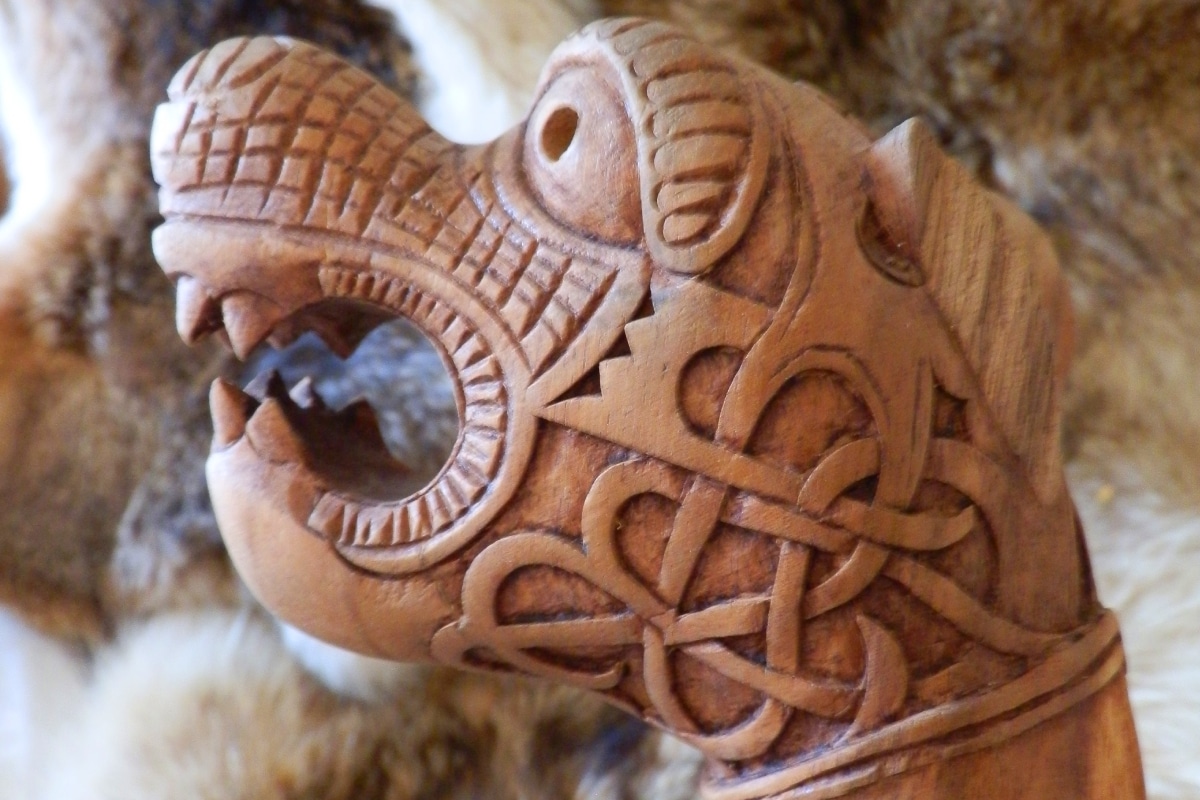
Daar is hij dan, Runenjarl, mijn historische roman over een jonge Viking in de 9e eeuw. Wel, hij is er alweer bijna twee maanden, maar ik wilde even wachten tot de website bijgewerkt was en dat duurde wat langer dan gehoopt. Dus alsnog bij deze: mijn jongste boek! En dit keer speelt het verhaal zich af in de tijd die me zo na aan het hart ligt: de Viking Periode.
Het eerste obstakel
Mij is vaker gevraagd “Wanneer schrijf je nu eens een roman over de Vikingtijd? Dat is toch de tijd die je al 30 jaar re-enact? Daar weet je toch heel veel van?”
Jazeker, en dat maakt het juist zo moeilijk. Klinkt paradoxaal, maar toch is het zo.
Allereerst duurde het lang voor de inspiratie kwam. Ik vermoed dat dit kwam, doordat ik te dicht met mijn neus op die periode zat. Het is voor mij te “echt”. Ik weet niet goed hoe ik het anders moet omschrijven, maar dit komt het dichtst bij hoe het voelt. Dus dan pakte ik mijn pen (nou ja, mijn toetsenbord, dus) en dacht: “Vikingen. Ja, en nu?”
Als ik een boek schrijf over een andere periode, dan begin ik met me in te lezen, met research, met studeren. En dan leer ik allerlei eigenaardigheden en weetjes en bijzonderheden over die tijd die mijn fantasie prikkelen. Regelmatig tref ik dan een juweeltje en denk: “Dat is tof voor mijn boek!” Zeggen we tegenwoordig nog ‘tof’, eigenlijk? Maar dat terzijde. Maar dan bruist mijn fantasie over en zie ik er hele verhaallijnen omheen en zo ontwikkelt zich dan een verhaal.
En ik kan me verliezen in zo’n tijd met dagdromen. Dat deed ik als klein kind al. Dan liep ik over straat en beeldde me in dat iedereen om me heen ridders waren. Of ik kon niet in slaap komen, maar fantaseerde dan dat ik in een hangmat op een piratenschip lag. Maar door een periode te re-enacten, gaat het fantasievolle er als het ware een beetje vanaf en wordt het soort van “echt”. En dus bleef het dagdromen uit. Ik moest dus terug naar hoe ik ooit over die periode fantaseerde, voor ik me er ook daadwerkelijk in onder dompelde, maar dat was alweer zo’n tijd geleden, dat ik terug moest naar schrijfseltjes van veertig jaar geleden, toen ik nog scenario’s schreef voor D&D.
Dus dat was het eerste obstakel: wat ga ik überhaupt schrijven. Moet het gaan over een krijger? Of juist een boer? Een man? Of een vrouw? Een Deen of een Noor of een Rusvik? Keuzes, keuzes. Ik kwam er niet uit.
Weglaten of interpreteren?
Ik wilde de periode ook recht doen. Juist doordat ik deze tijd al zo lang uitbeeldt, weet ik dat er heel veel vooroordelen over bestaan. En die zou ik in een boek ook willen ontzenuwen. Dus het meest voor de hand liggende en spannende personage zou uiteraard een krijger zijn, maar zou ik dan de, vaak verkeerde, vooroordelen niet juist bevestigen? Velen denken bij Vikingen toch al uitsluitend aan woeste, ongeciviliseerde barbaren, die alleen maar plunderen en verkrachten. Die helmen met hoorns, ja, dat weten de meeste mensen inmiddels wel dat dit niet klopt, maar dat beeld van die wrede wildemannen beklijft toch. Dus ik zou ook wat van de rijke cultuur willen laten zien.
Dat bracht me dan meteen bij de volgende valkuil. We weten veel over deze tijd, maar niet alles. We weten dat ze bepaalde feesten en ceremonies hadden, maar niet hoe die er precies aan toe gingen. We weten veel over de kleding, maar niet de details. Er is nog zoveel onzeker. Hoe verder je teruggaat in de tijd, des te meer hiaten er in onze kennis zitten. En dan zit je met het eeuwige dilemma als schrijver: laat ik het helemaal weg of schrijf in een eigen interpretatie, invulling, met het risico dat het historisch fout is?
Als ik het weg zou laten, bleef er toch wel erg weinig corpus over om de rijke cultuur van de Noormannen en Denen recht te doen. Je kan wel schrijven ‘En toen vierden ze jól’, maar dat levert toch niet echt een lekker boek op.
Moet je de iconische berserker weglaten? Of moet je interpreteren wat hij precies was? Moet je de al even iconische völva dan maar niet ten tonele voeren of moet je haar rituelen aan de hand van wat we wel weten en vergelijkbare rituelen in nog bestaande culturen erbij verzinnen? Wat was de ‘bloedarend’? Trauma-artsen zijn het erover eens dat zoals het beschreven is, medisch onmogelijk is. Dus moet het een poëtische of figuurlijke beschrijving betreffen, of misschien zelfs wel een vertaalfout. Dus wat doe je daarmee als schrijver?
Ik heb besloten al die onderwerpen die zo typisch voor die tijd en dat volk zijn, niet uit de weg te gaan, me gedegen in te lezen en dan een interpretatie te kiezen die het dichtst komt bij wat het had ‘kunnen zijn’. Maar omdat ik altijd zo historisch correct mogelijk wil schrijven, heb ik dat wel allemaal opgenomen in de Historische Achtergrond, die ik aan het eind van elk boek opneem. Dit keer is die dus tamelijk lang.
Welke spelling?
Ik had nog een ander probleem, waar ik heel lang mee geworsteld heb. Ik heb veel mensen om raad gevraagd, maar die zagen het probleem ook en hadden ook geen klinkklare oplossing. Want het Oud-Noors, zoals dat in alle bestaande woordenboeken wordt opgenomen, kent een aantal letters, die in ons alfabet niet voorkomen. Als ik die over zou nemen, zou dat mogelijk het lezen bemoeilijken. Het gaat om de volgende letters (en hoofdletters):
ð (Ð) – þ (Þ) – ǫ (Ǫ) – œ (Œ) – ø (Ø) – æ (Æ).
Vooral þ (Þ) zou voor problemen kunnen zorgen, omdat het lijkt op een p of b, wat het niet is.
Natuurlijk zou ik die letters kunnen vervangen. Dan zou ð ‘dh’ worden, þ zou je dan schrijven als ‘th’, æ als ‘ä’ en de andere drie letters als ‘ö’.
Nog afgezien van het feit dat je dan drie verschillende letters (en klanken) allemaal zou vervangen door één en dezelfde letter (ö), zou het ook lastig te lezen namen opleveren. Ik vind ‘Fridhthjófr’ niet fraai, met die ‘dhth’ achter elkaar, bijvoorbeeld. Bovendien, als je een woord of naam terug wilt vinden in een woordenboek, wordt dat ook lastig. Nu zal niet iedereen die neiging hebben, maar voor wie het wel wil, is het een handicap.
En wat doe je met die -r aan het eind van veel namen? Natuurlijk kan ik die weglaten. Rúnúlf of Rúnúlfr maakt niet zoveel verschil. Maar dan zou ik dat wel consequent moeten doen. Dus dan zou berserkr (berserker) berserk worden, wat weer gek klinkt. Die -r hoort er in de oorspronkelijke naam nu eenmaal gewoon achter.
Met andere woorden, elke keer als ik aan schrijven begon, liep ik tegen allerlei dilemma’s op waar ik niet goed mijn weg in vond.
Een lezerspubliek met kennis van zaken
Maar het allerbelangrijkste obstakel was toch wel angst. Het is altijd eng een boek uit te brengen. Mensen gaan het lezen en vinden er dan wat van. Natuurlijk hoop je dat mensen het leuk vinden, maar je weet dat dit niet altijd het geval zal zijn. Mijn boeken werden tot nu toe voor een groot deel gelezen door mensen die ik niet ken. Ze liggen in de bibliotheek en worden geleend of iemand vindt ze online en koopt ze dan. Meestal hoor je dan niet wat iemand ervan vindt. Hooguit kun je zien dat ze aanslaan, als iemand ook deel 2 aanschaft.
Maar ik wist van tevoren dat juist een Vikingroman gelezen zou gaan worden door veel vrienden en kennissen uit de hobby. En je weet dat sommigen het boek leuk zullen vinden, maar anderen kritiek zullen hebben. En kritiek van mensen die je goed kent, is minder anoniem dan van een onbekende uit een verre stad die het in de bibliotheek heeft geleend.
Bovendien betreft dit een lezerspubliek met kennis van zaken! Elke fout, elke misstap, en vooral elke interpretatie van de kennishiaten, zal onder een vergrootglas liggen.
Het engst is echter het feit dat je als schrijver heel veel van jezelf in je boeken legt. Geen meningen, al denken sommigen dat, maar wel hart en ziel, ervaringen en gevoelens, emoties en zwakheden. Je gaat als het ware met je billen bloot. En dat is op zijn zachtst gezegd spannend als je boek gelezen gaat worden door familie, vrienden en bekenden. Je gaat als het ware met je billen bloot en plein publique.
Maar bloed kruipt waar het niet gaan kan, noblesse oblige zogezegd, dus voilà, hier is hij dan, mijn eerste en laatste Vikingroman.
Ik ben benieuwd…
Facing the Music
There it is, Runenjarl (Rune Jarl), my historical novel about a young Viking in the 9th century. Well, it’s been around for almost two months now, but I wanted to wait a while for the website to update and that took a bit longer than hoped. So here it is: my latest book! And this time the story takes place in the time that is so close to my heart: the Viking Age.
The first obstacle
I have often been asked: “When are you going to write a novel about the Viking Age? Isn’t that the time you have been re-enacting for 30 years? You know a lot about it, don’t you?”
Yes, and that’s what makes it so difficult. Sounds paradoxical, but it is true.
First of all, it took a long time for inspiration to come. I suspect this was because I was too close to that period. It’s too “real” for me. I’m not sure how else to describe it, but this is the closest thing to how it feels. So then I would grab my pen (well, my keyboard, that is) and think: “Vikings. Yes, and now what?”
If I write a book about a different period, I start by reading up, researching, studying. And then I learn all kinds of peculiarities and facts and details about that time that stimulate my imagination. I regularly find a gem and think: “That’s cool for my book!” Do we still say ‘cool’ these days, anyway? But that aside. But then my imagination bubbles over and I see whole storylines around it and that’s how a story develops.
And I can lose myself in such a time with daydreaming. I already did that as a small child. Then I would walk down the street and imagine that everyone around me was a knight. Or I couldn’t fall asleep, but then fantasized that I was lying in a hammock on a pirate ship. But by re-enacting a period, the imaginative goes away a bit, as it were, and it becomes kind of “real”. And so the daydreaming failed to appear. So I had to go back to how I once fantasized about that period, before I actually immersed myself in it, but that was such a long time ago that I had to go back to writings from forty years ago, when I was still writing scripts for D&D.
So that was the first obstacle: what am I going to write at all. Does it have to be about a warrior? Or a farmer? A man? Or a woman? A Dane or a Norseman or a Rusvik? Choices, choices. I couldn’t figure it out.
Omitting or interpreting?
I also wanted to do justice to the period. Precisely because I have been portraying this period for so long, I know that there are a lot of prejudices about it. And I would like to refute those in a book as well. So the most obvious and exciting character would of course be a warrior, but wouldn’t I then confirm the, often wrong, prejudices? Many people think of Vikings as savage, uncivilized barbarians, who only plunder and rape, anyway. Those helmets with horns, yes, most people know by now that this is not true, but that image of those cruel wild men still sticks. So I would also like to show some of the rich culture.
That immediately brought me to the next pitfall. We know a lot about this time, but not everything. We know that they had certain feasts and ceremonies, but not exactly how they went. We know a lot about the clothing, but not the details. There is still so much uncertainty. The further back in time you go, the more gaps there are in our knowledge. And then you are faced with the eternal dilemma as a writer: do I leave it out completely or do I write in my own interpretation, filling in the blanks, with the risk that it is historically wrong?
If I were to leave it out, there would be very little corpus left to do justice to the rich culture of the Norsemen and Danes. You can write ‘And then they celebrated jól‘, but that doesn’t really make for a nice book.
Should you leave out the iconic berserker? Or do you have to interpret what he was exactly? Should you not bring up the equally iconic völva or should you invent her rituals based on what we do know and similar rituals in still existing cultures? What was the ‘blood eagle’? Trauma doctors agree that the way it is described, it is medically impossible. So it must be a poetic or figurative description, or perhaps even a translation error. So what do you do with that as a writer?
I have decided not to avoid all those subjects that are so typical of that time and that people, to read academic content thoroughly and then choose an interpretation that comes closest to what it ‘could have been’. But because I always want to write as historically accurate as possible, I have included all that in the Historical Background, which I include at the end of each book. This time it is quite long.
Which spelling?
I had another problem, which I struggled with for a long time. I asked many people for advice, but they also saw the problem and didn’t have a clear solution. Because Old Norse, as it is included in all existing dictionaries, has a number of letters that do not occur in our alphabet. If I were to adopt those, it might make reading more difficult. It concerns the following letters (and capital letters):
ð (Ð) – þ (Þ) – ǫ (Ǫ) – œ (Œ) – ø (Ø) – æ (Æ).
Especially þ (Þ) could cause problems, because it looks like a p or b, which it is not.
Of course I could replace those letters. Then ð would become ‘dh’, þ would be written as ’th’, æ as ‘ä’ and the other three letters as ‘ö’.
Apart from the fact that you would then replace three different letters (and sounds) with one and the same letter (ö), it would also result in names that are difficult to read. I don’t like ‘Fridhthjófr’, with that ‘dhth’ in succession, for example. Moreover, if you want to find a word or name in a dictionary, that also becomes difficult. Now not everyone will have that tendency, but for those who do wish to, it is a handicap.
And what do you do with that -r at the end of many names? Of course I can leave it out. Rúnúlf or Rúnúlfr doesn’t make much difference. But then I would have to do that consistently. So then berserkr (berserker) would become berserk, which sounds weird. That -r simply belongs after it in the original name.
In other words, every time I started writing, I ran into all kinds of dilemmas that I didn’t quite find my way into.
Knowledgeable readers
But the most important obstacle was fear. It’s always scary to publish a book. People will read it and then think something of it. Of course, you hope that they like it, but you know that this will not always be the case. Until now, my books have largely been read by people I don’t know. They are in the library and are borrowed or someone finds them online and then buys them. Usually, you don’t hear what someone thinks of it. At most, you can see that they catch on, if someone also buys part 2.
But I knew in advance that a Viking novel would be read by many friends and acquaintances from the hobby. And you know that some will like the book, but others will criticize. And criticism from people you know well is less anonymous than from a stranger from a distant city who has borrowed it from the library.
Moreover, these are knowledgeable readers! Every mistake, every misstep, and especially every interpretation of the knowledge gaps, will be under a magnifying glass.
The scariest thing, however, is the fact that as a writer you put a lot of yourself into your books. No opinions, although some mat think so, but heart and soul, experiences and feelings, emotions and weaknesses. You face the music. And that is scary to say the least if your book is going to be read by family, friends and acquaintances. You go with your buttocks exposed en plein publique, as it were.
But blood is thicker than water, noblesse oblige so to speak, so voilà, here it is, my first and last Viking novel.
I’m curious…
Comments (0)