
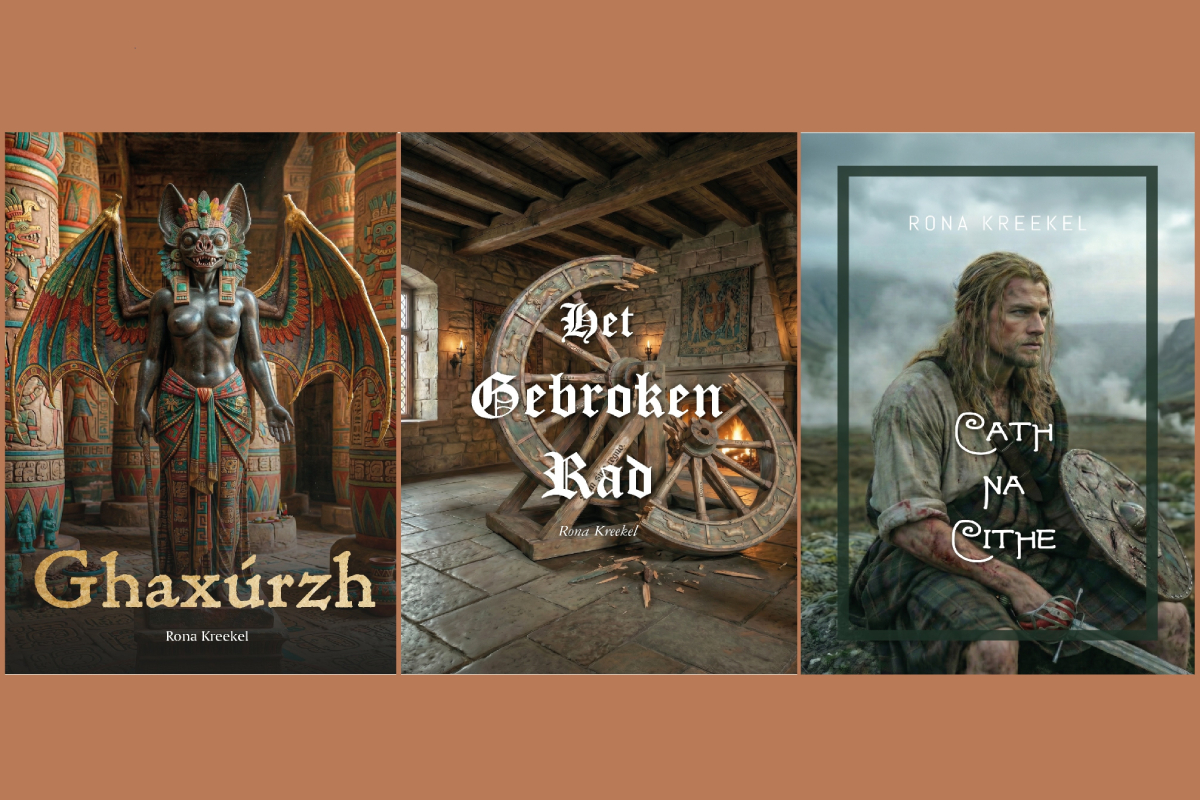
Vandaag wil ik twee nieuwe boeken aankondigen. Waarom weer twee tegelijk? Wel, één is nieuw, de ander lag al héél lang op de plank en ze samen door de uitgever laten opmaken kost me maar één keer de opstartkosten, dus het is puur een financieel besluit.
Laten we beginnen met Het Gebroken Rad, echt het allerlaatste deel in de Steinburg Mysteriën serie.
Die serie was toch al klaar? Ja, dat dacht ik zelf ook. Vorig jaar rond deze tijd dacht ik de laatste twee delen geschreven te hebben. Maar bij een totaal ongerelateerde research kwam ik toch weer achter een paar feiten en besefte toen dat Gwides verhaal niet af was.
De rode draad door de moordmysteriën is natuurlijk het Groot Interregnum (een lange periode in de 13e eeuw waarin er geen Rooms-Duitse koning was gekozen) en in het verlengde daarvan de ongebreidelde agressie van Ottokar II van Bohemen.
In het laatste boek wordt hij definitief verslagen in de grootste ridderslag ooit. Dat was een waardig einde aan de serie. Maar het eerste boek in deze serie begint in 1263 en dan is Ottokar al een tijdje aan het etteren. Zou het niet juist zijn deze serie, die eindigt met de val van Ottokar nadat er eindelijk een Rooms-Duitse koning gekozen is, te laten beginnen met zijn eerste daad van expansiedrift en het begin van het koningloze tijdperk?
Ik raakte enthousiast en besloot dat ik hiermee ook meteen Gwide kon laten opdraven als schildknaap vóór hij ridder werd, en hoe ik kon vertellen hoe de ongewone vriendschap met de schout en de waardin ontstaan zijn.
Het gaf me ook de kans om oma Hellesende weer ten tonele te voeren, dit keer nog in leven, en de basis te leggen voor de jaloezie van Walraven naar zijn oom toe. En zo begon ik te schrijven en liet deze prequel beginnen in 1257, zes jaar voor het oorspronkelijk eerste deel.
Het Gebroken Rad
Het boek heet Het Gebroken Rad. Waarom het zo heet, kan ik niet verklappen, want dat zou een enorme spoiler alert zijn. Maar het dekt de lading van beide moordverhalen, zoals elk boek uit twee onafhankelijke verhalen bestaat.
Het eerste heet De Trossemeester. Dat is een oud woord voor legerleider, want tros betekent groep krijgers. Het begint dus met de inval van Ottokar in Beieren en dus roepen de Beierse hertogen hun baanderheren op om ten strijde te trekken. Zo ook de graaf van Steinburg.
Gwide gaat ook mee, als schildknaap van één van de ridders. Maar als er dan een moord gepleegd wordt, wordt hij als familielid van de graaf erin betrokken.
De veldslag die in dit boek beschreven wordt, is historisch, hoewel er weinig details over bekend zijn. Maar het wordt meteen duidelijk dat het Ottokar menens is. Verder maken we kennis met Walpurge en met Peter, de latere waardin en rakker.
Zijn mening legt op dat moment nog niet zoveel gewicht in de schaal en dat zal desastreuze gevolgen hebben. Maar ook daar kan ik niet te veel over zeggen.
Het tweede verhaal in dit boek speelt zich af in 1260 en heet De Slaaf uit Genua. Ja, er bestond in Europa nog slavernij. Niet overal, maar in onder andere Spanje, Zuid-Frankrijk en Italië nog wel. Genua was één van de grote slavencentra.
De achtergrond van de moord is het grote feest en de markt die zijn georganiseerd om het verkrijgen van stadsrechten van Steinburg te vieren. Gwide en de schout moeten echt alle zeilen bijzetten om het probleem op te lossen, dat al maar groter en complexer wordt.
Ik had natuurlijk ook weer een kaft nodig. Gelukkig heb ik nu een abonnement op een dienst waar ik met AI prachtige afbeeldingen kan maken. Maar toch was het nog een hele toer. De ene keer zaten er van die duidelijk AI-fouten in, de andere keer bleef het programma maar komen met afbeeldingen die eerder in de eeuw erna hoorden. Ik ben heel lang aan het puzzelen en bijschaven geweest tot ik eindelijk iets had waar ik tevreden over was.
Ghaxúrzh
Het andere boek dat tegelijkertijd gedrukt is, heet Ghaxúrzh en het is fantasy.
Misschien herinneren sommigen zich nog een blog van een hele tijd geleden waarin ik had uitgelegd hoe ik de corona-lockdowns had gebruikt om mijn allereerste verhaal te herschrijven en uit te geven.
Ik ben op mijn 20e aan dat verhaal (Salham) gaan schrijven, maar dat bestond toen nog uit allerlei nevenwerelden en zijverhalen. Eerst werd het piratendeel van het verhaal steeds groter en uiteindelijk heb ik dat eruit gehaald, van fantasy omgebouwd tot historische roman en dat werd uiteindelijk de Port Royal serie.
Daarna werd het verhaal uit Steinburg verwijderd en dat werd de Steinburg Mysteriën serie. Runenjarl is ook in den beginne in Salham ontstaan.
Ghaxúrzh is het laatste zijverhaal dat geen plaats vond in de kern van Salham en dus nog in mijn computer zat. Ik moest het wel herschrijven, want stukjes eruit had ik her en der elders hergebruikt.
De wereld waar het verhaal zich afspeelt, is hevig geïnspireerd door de D&D Dark Sun wereld en de culturen van de Azteken en oude Egyptenaren. Het verhaal gaat over prinses Marashi, die erachter komt dat de generaal een sluw plan heeft bedacht om haar te laten offeren. Ze vlucht en valt in handen van een rebel, die ook de dodelijke intriges ontvlucht is.
Samen besluiten ze hun krachten te bundelen om hun rechtmatige plaats te heroveren en hun familie te redden.
De kaft was problematisch. Ik wilde iets wat zowel de Azteekse als de Egyptische cultuur verenigde. Ik heb eerst iets getekend en hoewel dat niet verkeerd was, was het eigenlijk niet helemaal wat ik bedoelde. Maar ja, dat AI-programma, hè? En dus gaf ik een prompt en dit keer hoefde ik geen wekenlang te schaven en was het met drie vervolgprompts meteen goed! Dit was exact wat ik in gedachten had!
Dus zie hier twee nieuwe boeken die te bestellen zijn.
Cath na Cithe
Wie de website heel goed kent, zal er nog een nieuw boek zien. Waarom ik dat hier niet aankondig? Omdat het geen ISBN-nummer heeft en eigenlijk niet voor uitgave bestemd is. Als iemand het lezen wil, kan dat, maar ik ga het niet officieel uitgeven.
De reden daarvoor heb ik in een vorig blog al uitgelegd bij Broch nam Broc en het vervolg Fuil na Fill. Dit boek, Cath na Cithe, is het derde deel in de serie Dùn nan Dàin, boeken in het genre alternatieve geschiedenis. Ze zijn puur voor mijn eigen plezier geschreven en ik ben ook erg blij met de kaft, waarbij het best wel lastig was om het programma te laten doen wat ik wilde.
Maar al doende leert men en ik word steeds handiger hierin. Ik moet zeggen dat het werken met AI voor het maken van afbeeldingen me enorm veel plezier verschaft en dat ik er heel veel creativiteit in kwijt kan.
Plannen voor de toekomst
Ben ik uitgeschreven? Nee, al gaat het wel steeds langzamer. Ik heb nu echt, echt niets meer ‘op de plank’ liggen dat ik decennia geleden al had geschreven en alleen nog bewerkt hoefde te worden, dus vanaf nu moet het van scratch. Bovendien wordt het steeds moeilijker om plots en gebeurtenissen te vinden die ik al niet gebruikt heb.
En ik ben na mijn werk tegenwoordig te vermoeid om nog hele avonden te schrijven. Ik merk gewoon dat de jaren gaan tellen. Als ik nu thuiskom, ga ik meestal eerst even liggen en na het eten ben ik niet meer fris en fruitig genoeg om nog een letter op papier te krijgen. Ik ben dus afhankelijk van de uurtjes die ik over heb in de weekenden.
Maar waar ben ik dan mee bezig? Met een heleboel tegelijk, omdat ik nooit achter elkaar aan één boek kan schrijven. Ik moet soms even afstand nemen en iets anders doen om weer inspiratie te krijgen. Er zijn dus een aantal verhalen waarvan ik al meerdere hoofdstukken heb geschreven, maar die nog niet echt lekker van de grond komen.
Eén is De Brachmarch Bastaard. Het gaat over het Witte Schip dat in 1120 verging onder mysterieuze omstandigheden en waarbij hele hordes hoge edelen verdronken, onder wie de kroonprins, waardoor Engeland in een successiecrisis gestort werd. Er was één overlevende. Maar waarom kon er niet nog één zijn? Eén die getuige was van hoe het gebeurd is? Het verhaal gaat erover dat die overlevende in opdracht van de Engelse koning op zoek moet gaan naar de dader. Dit boek hoop ik als eerste af te krijgen, maar ik ben tot nu toe nog niet tevreden hoe het zich ontwikkelt.
Verder ben ik begonnen aan het post-apocalyptische verhaal Doom Domes, aan Appalachian Rag (het vervolg op Southern Square), aan Croich na Crìche (het vervolg op Cath na Cithe), aan Het Hutaten Mysterie, over een archeologe die het graf van Nefertiti op het spoor is, aan Als Draecx Bloet Fel, een historische roman over de Tachtigjarige Oorlog, aan De Bietencampagne, een streekroman over de Haarlemmermeer waarin ik alle familieanekdotes van mijn vader verwerk, en aan Orgels voor Berlijn, losjes over wat mijn vader meegemaakt heeft tijdens zijn dwangarbeid in de oorlog in die stad en tijdens de bevrijding.
En dan zijn er nog wat ideeën voor boeken waar ik überhaupt nog aan moet beginnen.
Maar verwacht heel binnenkort even niets nieuws.
The Broken Wheel & Ghaxúrzh
Today I want to announce two new books. Why two at the same time again? Well, one is new, the other has been waiting on the shelf for a long time and having them formatted by the publisher together only costs me one time the start-up costs, so it’s purely a financial decision.
Let’s start with The Broken Wheel, really the very last part in the Steinburg Mysteries series.
But that series was already finished, wasn’t it? Yes, I thought so myself. Last year around this time I thought I had written the last two parts. But in a totally unrelated research, I found out a few facts and then realized that Gwide’s story was not yet finished.
The common thread through the murder mysteries is of course the Great Interregnum (a long period in the 13th century in which no Holy Roman Emperor or King of the Romans was elected) and by extension the unbridled aggression of Ottokar II of Bohemia.
In the last book, he is definitively defeated in the largest knightly battle ever. But the first book in this series starts in 1263 and by then Ottokar had already been playing havoc for a some time. Would it not be right to start this series, which ends with the fall of Ottokar after a Roman German king has finally been elected, with his first act of expansionism and the beginning of the kingless era?
I became enthusiastic and decided that I could also use this to have Gwide appear as a squire before he became knighted, and how I could tell how the unusual friendship with the bailiff/sheriff and the landlady came about.
It also gave me the opportunity to bring Grandma Hellesende back on stage, this time still alive, and to lay the foundation for Walraven’s jealousy of his uncle. And so I started writing and let this prequel start in 1257, six years before the original first part.
The Broken Wheel
The book is called The Broken Wheel. Why it’s called that, I can’t tell, because that would be a huge spoiler alert. But it covers the load of both murder stories, just as every book consists of two independent stories.
The first is called The Trossmaster. That is an old word for army leader, because tross means group of warriors (and later camp followers or bagage train). Maybe a better English translation would be something like fyrd lord. So it starts with Ottokar’s invasion of Bavaria and so the Bavarian dukes call on their bannermen to go to war. So did the Count of Steinburg.
Gwide also goes along, as the squire of one of the knights. But when a murder is committed, he is involved as a family member of the count.
The battle described in this book is historical, although few details are known about it. But it immediately becomes clear that Ottokar means business. We also meet Walpurge and Peter, the later landlady and constable/catchpole.
His opinion does not carry much weight at that time and that will have disastrous consequences. But I can’t say too much about that either.
The second story in this book takes place in 1260 and is called The Slave from Genoa. Yes, slavery still existed in Europe. Not everywhere, but in Spain, southern France and Italy, among others. Genoa was one of the great slave centers.
The background to the murder is the big feast and market that were organized to celebrate the obtaining of city rights of Steinburg. Gwide and the bailiff really have to pull out all the stops to solve the problem, which keeps getting bigger and more complex.
Of course I also needed a cover again. Fortunately, I now have a subscription to a service where I can create beautiful images with AI. But it was still quite a challenge. Sometimes there were those obvious AI errors, other times the program kept coming up with images that belonged earlier in the century that followed. I spent a long time puzzling and refining until I finally had something I was satisfied with.
Ghaxúrzh
The other book that was printed at the same time is called Ghaxúrzh and it is fantasy.
Maybe some people remember a blog from a long time ago in which I had explained how I had used the corona lockdowns to rewrite and publish my very first story.
I started writing that story (Salham) when I was 20, but at the time it still consisted of all kinds of side worlds and side stories. First the pirate part of the story got bigger and bigger and eventually I took that out, converted it from fantasy into historical novel and that eventually became the Port Royal series.
After that, the story about Steinburg was removed and that became the Steinburg Mysteries series. Runenjarl also originated in Salham in the beginning.
Ghaxúrzh is the last side story that did not take place in the core of Salham and was therefore still in my computer. I had to rewrite it, because I had reused parts of it elsewhere here and there.
The world where the story takes place is heavily inspired by the D&D Dark Sun world and the cultures of the Aztecs and ancient Egyptians. The story is about Princess Marashi, who finds out that the general has devised a cunning plan to have her sacrificed. She flees and falls into the hands of a rebel, who has also fled the deadly intrigues.
Together, they decide to join forces to reclaim their rightful place and save their family.
The cover was problematic. I wanted something that united both Aztec and Egyptian culture. I first drew something and although that wasn’t too bad, it wasn’t quite what I meant. But hey, that AI program, huh? And so I gave a prompt and this time I didn’t have to polish for weeks and with three follow-up prompts it was right from the start! This was exactly what I had in mind!
So here are two new books that can be ordered.
Cath na Cithe
Those who know the website very well will see another new book. Why don’t I officially announce that here? Because it does not have an ISBN number and is not actually intended for publication. If someone wants to read it, they can, but I’m not going to publish it officially.
I have already explained the reason for this in a previous blog about Broch nam Broc and the sequel Fuil na Fill. This book, Cath na Cithe, is the third volume in the series Dùn nan Dàin, books in the genre of alternative history. They were written purely for my own pleasure and I am also very happy with the cover, which was quite difficult to get the program to do what I wanted.
But one learns by doing and I am becoming more and more skilled at this. I have to say that working with AI for creating images gives me a lot of pleasure and that I can put a lot of creativity into it.
Plans for the future
Have I finished writing? No, although it is going slower and slower. I really, really don’t have anything left ‘on the shelf’ that I had written decades ago and only needed to be edited, so from now on it has to be from scratch. Moreover, it is becoming increasingly difficult to find plots and events that I have not already used.
And I’m too tired after work these days to write all evenings. I just notice that the years are starting to count. When I come home now, I usually lie down first and after dinner I am no longer bright and breezy enough to get another letter on paper. So I depend on the hours I have left in the weekends.
But what am I writing? A lot at the same time, because I can never write one book in a row. Sometimes I have to take a step back and do something else to get inspiration again. So there are a number of stories of which I have already written several chapters, but which are not really getting off the ground yet.
One is The Brachmarch Bastard. It is about the White Ship that sank in 1120 under mysterious circumstances and in which whole hordes of high nobles drowned, including the crown prince, plunging England into a crisis of succession. There was one survivor. But why couldn’t there be another one? One who witnessed how it happened? The story is about the survivor having to search for the culprit on behalf of the English king. I hope to finish this book first, but so far I am not satisfied with how it is developing.
I have also started the post-apocalyptic story Doom Domes, Appalachian Rag (the sequel to Southern Square), Croich na Crìche (the sequel to Cath na Cithe), The Hutaten Mystery, about an archaeologist who is on the trail of Nefertiti’s tomb, Als Draecx Bloet Fel, a historical novel about the Eighty Years’ War, to De Bietencampagne, a regional novel about the Haarlemmermeer in which I incorporate all my father’s family anecdotes, and Organs for Berlin, loosely about what my father experienced during his forced labor during the war in that city and during the liberation.
And then there are some ideas for books that I still have to start writing at all.
But don’t expect anything new very soon.
Comments (0)