Geluk kun je afdwingen, wordt er wel eens gezegd. Maar ik betwijfel of het altijd zo is. Soms heeft iets ook gewoon met mazzel of domme pech te maken.
Zo las ik het verslag van de Driekeizerslag van Austerlitz tussen Napoléon Bonaparte enerzijds en de keizers van Rusland en Oostenrijk anderzijds. Keizer Napoléon had een enorm gewaagd plan bedacht, wat erop neer kwam dat hij zijn rechterflank gevaarlijk verzwakte om de vijand in de val te lokken. Maar het slagen of hopeloos falen van het plan viel en stond met de mist. Als de mist te vroeg op zou trekken, zou de vijand zijn omtrekkende beweging te vroeg opgemerkt hebben, als de mist te laat op zou trekken, zou het Franse leger blind vechten.
Bij Austerlitz had hij mazzel, bij Waterloo pech. Daar gooide de regen roet in het Franse eten. Door de aanhoudende, harde regenval kon hij niet zo snel optrekken als hij had gewild, wat Wellington de tijd gaf om stelling te nemen en Blücher de mogelijkheid gaf net op tijd op het slagveld te verschijnen. Die regen was domme pech, maar kwam niet uit de lucht vallen. Wel, nou ja, regen komt wel uit de lucht vallen, maar het slechte weer had wel een oorzaak, volgens geleerden. Want twee maanden eerder was de vulkaan Tambora in Indonesië verwoestend uitgebarsten, wat de aarde in het “jaar zonder zomer” in 1816 stortte.
Een lange stroom pechgevallen
Waarom ik over pech begon? Mijn familie heeft er de laatste twee jaar ook voortdurend mee te maken, een lange stroom aan pechgevallen, van een hartaanval bij mijn man afgelopen juli tot een redelijk zwaar ongeluk van mijn broer vanochtend, van medische problemen bij familieleden, een longontsteking bij mijn 95-jarige moeder en kostbaar gepruts van incompetente aannemers, en alles wat daartussen zit.
Dat is op privégebied, maar op boekengebied zat het ook niet altijd mee. Mijn zending naar de Koninklijke Bibliotheek kwam buiten mijn schuld tot twee keer aan toe aan bij een ander bedrijf, tot het uiteindelijk weer naar mij retour gezonden werd. Gelukkig kende één van mijn vrienden iemand die bij de KB werkt en de zending wel persoonlijk wilde afgeven. En mijn uitgever was in december even vergeten om mijn laatste boek aan te bieden bij Biblion, waardoor het moment dat het te leen is bij de bibliotheken met maanden vertraagd is, wat weer tot gevolg heeft dat de verschijningsdatum van het laatste deel van de trilogie ook opgeschoven moet worden.
Tot zover de update hoe het op het privé- en boekenfront staat, maar deze inleiding heeft natuurlijk niets te maken met de titel van de blog. Wel, misschien toch wel een beetje. Want ergens is het natuurlijk pure pech als je in de wens om aan de heersende schoonheidsidealen te voldoen, je door onwetendheid van de wetenschap gebruik maakt van spullen die je alleen maar lelijker zullen maken. Als het daarbij blijft…
Mooi willen zijn is van alle tijden
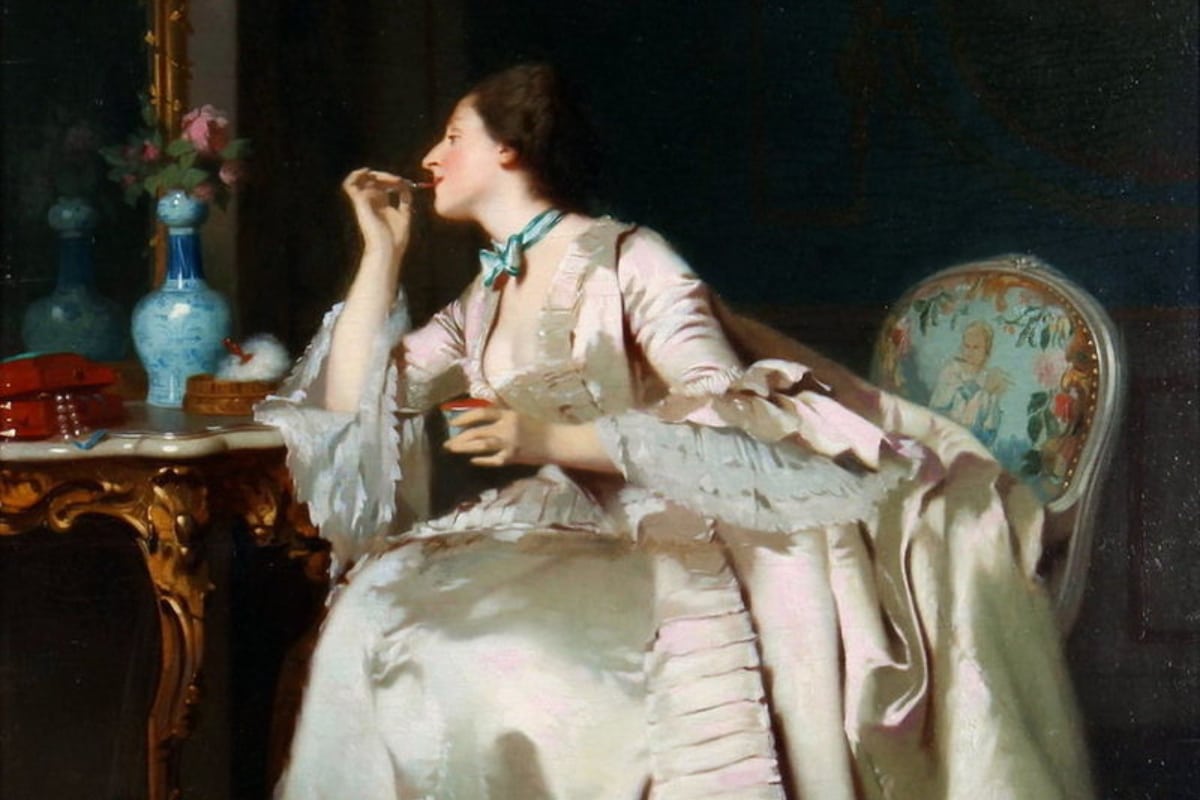
Mooi willen zijn is van alle tijden. Dus make-up is ook al oud. Het vermoeden bestaat dat de IJstijd-mens zich al versierde met oker op het gelaat. Zelfs de meest primitieve stammen versieren zich met takjes en bloemen, schelpen en botten, en allerlei soorten pigment. Wie eens op internet zoekt naar de Surma en Mursi stammen in de Omo Vallei (een gebied tussen Ethiopië, Kenya en Soedan), ziet hoe fantasievol mensen wat de natuur hun biedt kunnen gebruiken om zich mooi te maken.
En niet alleen verf en voorwerpen worden gebruikt als make-up. Ook zelfverminking komt voor, hoewel de oorsprong daarvan vaak ligt in het beschermen van de vrouwelijke stamleden tegen ontvoering door vijandige stammen. Je kunt hierbij denken aan de lipschijven van de Mursi, neuspluggen van de Apatami, de verlengde nekken van de Karen, de misvormde schedels van de Mangbetu en Maya, de gevulde tanden van de Mentawai, (litteken-)tatoeages en piercings. Maar dat is weer een heel ander verhaal.
Maar make-up was niet altijd ongevaarlijk… En soms zelfs ronduit dodelijk. Soms wist de gebruiker dat niet door ontbrekende wetenschappelijke kennis van die tijd, maar soms was het wel (deels) bekend, maar nam men de risico’s op de koop toe. Ach, ook nu doen we vaak dingen die ongezond voor ons zijn, dus dat is niets nieuws. Denk maar eens waar Botox werkelijk van gemaakt is!
En alsof giftige schoonheidsproducten al niet erg genoeg waren, had onze arme voorouder ook nog eens te maken met giftige kleurstoffen van zijn kleding, giftige medicijnen en andere giftige gevaren die overal op de loer lagen! Om nog maar te zwijgen van hoe ongezond de extreme korsetten waren!
Maar laten we met make-up beginnen, want anders had ik deze blog een andere titel moeten geven.
Giftig lood en kwik
Een veelvoorkomend ingrediënt was lood. Het zat in eyeliner, oogmake-up, crèmes om de huid lichter te maken en sproeten te verwijderen en in foundation voor een bleek gelaat. Het werd al door de Egyptenaren en Romeinen gebruikt en verder vooral in de Renaissance en 19e eeuw. De gevolgen van dit goedje waren niet mals: rottende tanden, haaruitval, hoofdpijn, buikpijn, hoge bloeddruk, spierpijn, gewrichtspijn, leermoeilijkheden en ontwikkelingsstoornissen bij kinderen. In extreme gevallen kon je ervan in coma raken. Daarnaast, oh karma, beschadigde het de huid, waardoor er dus nog meer make-up nodig was, met nog meer beschadigingen als gevolg. En als je het voor je huid gebruikte, mocht je niet lachen, want het werkt aangelengd met eiwit en lachen zou barstjes veroorzaken in het laagje smeersel.
In het begin van de 20e eeuw begonnen vrouwen zich te realiseren dat lood gevaarlijk was. En dus grepen ze in het vervolg naar cyanide om hun haar te verven. De symptomen van cyanidevergiftiging zijn hoofdpijn, duizeligheid, kortademigheid, overgeven en de dood.
Ook zo’n lekker gezond goedje was kwik. Het werd in de vijftiende eeuw gebruikt om je gezicht mee te peelen of scrubben, het was de basis voor vermiljoen, een pigment dat in rouge en lipstick zat, wenkbrauwen werden ermee behandeld en men probeerde er wimpers voller mee te krijgen. Helaas werd je er ook krankzinnig van. De Engelse uitdrukking ‘mad as a hatter’ heeft een historische basis, want juist hoedenmakers kwamen heel veel in contact met kwik. En ja, het zat ook nog eens in een ruime verscheidenheid van medicijnen. Zo vond men kwik een beproefd goedje om venerische ziekten mee te bestrijden.
Gezellig arsenicum
Nog gezelliger wordt het met arsenicum. Tot de jaren 20 van de vorige eeuw werd het gebruikt om onzuiverheden van de huid mee te behandelen, maar wel in lage doses. In de 19e eeuw werd het echter ook opgegeten en in baden gedaan. De gevolgen van langdurig of overmatig gebruik waren laesies van de handen en voeten, nierfalen, haaruitval, conjunctivitis (een soort oogontsteking), keratosis (een soort huidaandoening), vitiligo en zelfs de dood. Daarnaast was het ook nog eens verslavend. Het was dermate gevaarlijk, dat het in de 19e eeuw hét middel was om mee te vergiftigen. Arsenicum-moorden waren toen een ware plaag.
Je kunt natuurlijk nog een stapje verder gaan en ongebluste kalk gaan gebruiken. Samen met lood en zwavel (!) werd het in de 16e eeuw gebruikt om het haar lichter of roder te maken. De gevolgen waren hoofdpijn, misselijkheid en ernstige bloedneuzen.
Wie mooie, grote pupillen wilde, gebruikte oogdruppels van belladonna. Dat veroorzaakte niet alleen hartkloppingen, maar bizar genoeg ook blindheid. En als je geen belladonna kon krijgen, dan kon je altijd nog lekker citroensap of parfum in je ogen gooien!
In de negentiende eeuw werk ammoniak gebruikt om in de ochtend het gezicht te wassen en om de haargroei te stimuleren. Vreemd genoeg werd het ook gebruikt om juist haar te verwijderen. Opium werd gebruikt in nachtmaskers. En wie echt heel bleek wilde lijken, gebruikte lekker giftig email waarover dan met indigo aderen geschilderd werden.
Radium
Denk niet dat dit iets was van het onderontwikkelde verleden, waarin men nog geen kennis van zaken had. Vanaf 1917 werd er ruimschoots gebruik gemaakt van radium. Jawel, radioactief radium! Het zat in zowat elk product, van gezondheidstonics tot schoonheidsproducten als lippenstift, gezichtspoeder en rouge, van condooms tot luiers. De meisjes die in de radiumfabrieken werkten (de beroemde Radium Girls) gaven zelfs een groenig licht, wat super was ’s nachts bij het uitgaan. Het was zo’n geliefd effect, dat meisjes er graag werkten. Helaas veroorzaakt radium allerlei kwalen en pijn en leidt het onherroepelijk tot mismaaktheid en daarna de dood.
Gif zat niet alleen in make-up. Het zat ook in verf (zowel voor huizen en schilderijen als voor kleding), in medicijnen en in behang. Pigmenten voor kleding waren vaak niet ongevaarlijk.
In verf en behang kon je arsenicum aantreffen en loodwit wordt al van voor het jaar nul gebruikt voor cosmetica en verf voor schilderijen. In middeleeuwse manuscripten (maar ook al in het oude Egypte) werd rood lood of minium gebruikt. Napels-geel wordt gemaakt van lood en antimoon en komt onder andere voor in Egyptisch en Mesopotamisch glas en was populair in de periode 1750-1850.
Linke soep was vermiljoen, waar kwik in zit en wat hierboven al genoemd is. Ook de Romeinen gebruikten dit al. Het beroemde Scheele’s Groen of arsenicumgroen was arseen gemengd met onder andere kopersulfaat. Dit werd gebruikt voor kleding, speelgoed en behang. In 1808 werd het opgevolgd door Parijs-Groen, waar ook arseen in zat en dat tot de jaren 60 van de vorige eeuw toegepast werd. In de 19e eeuw stierf Matilda Scheurer aan dit goed. Ze werkte in een fabriek voor kunstbloemen en was net even te vaak ermee in aanraking gekomen.
En ten slotte werd in de 20e eeuw uranium gebruikt voor keramiekglazuur!
En sommige van deze ingrediënten zijn niet alleen levensgevaarlijk, maar ook nog eens verslavend.
En last but not least: uit pure onwetendheid werd voedsel in het begin in loden blikken gedaan. Er wordt aangenomen dat dit heeft meegespeeld bij de dood van de mannen op de poolexpeditie van Franklin in de 19e eeuw.
Wie mooi wil zijn moet pijn lijden
Maar weten we nu beter dan? Ik noemde al even botox, waar (zeer kleine doses) van botulinetoxine in zit, wat de vogelziekte botulisme veroorzaakt. Bijna alle vrouwen dragen wel eens hoge hakken, maar bij dagelijks gebruik kunnen die schade veroorzaken aan de ruggengraat, heupen, knieën, enkels en voeten. De meeste producten die de tanden bleken bevatten waterstofperoxide, die het tandglazuur kunnen aantasten. Uv-licht is bijzonder schadelijk en kan kanker veroorzaken, maar het wordt zonder na te denken gebruikt voor gel-nagels. Daarnaast maakt het ook de nagels zwakker. Verder werken ook zonnebanken met Uv-straling. En hoe vaak gaat het niet fout met borstvergrotingen, lipfillers en vergelijkbare ingrepen?
Wie mooi wil zijn, moet pijn lijden…
Poison on your phiz
It is sometimes said that happiness can be forced. But I doubt it’s always like that. Sometimes something just has to do with luck or bad luck.
For example, I read the account of the Battle of the Three Emperors of Austerlitz between Napoléon Bonaparte on the one hand and the emperors of Russia and Austria on the other. Emperor Napoléon had devised a hugely daring plan, which amounted to dangerously weakening his right flank in order to trap the enemy. But the success or hopeless failure of the plan depended on the fog. If the fog lifted too early, the enemy would have noticed his flanking movement too soon, if the fog lifted too late, the French army would fight blindly.
At Austerlitz he was lucky, at Waterloo he was unlucky. There, the rain threw a spanner in the works of France. Due to the continuous, heavy rainfall, he was unable to advance as quickly as he would have liked, which gave Wellington time to bring his troops into position and offered Blücher the opportunity to appear on the battlefield just in time. That rain was bad luck, but it didn’t come out of the blue. Well, well, rain does fall from the blue sky, but the bad weather did have a cause, according to scientists. For two months earlier, the Tambora volcano in Indonesia had erupted devastatingly, plunging the earth into the ‘year without a summer’ in 1816.
A long stream of unlucky incidents
Why did I bring up bad luck? My family has also been dealing with it continuously for the last two years, a long stream of breakdowns, from my husband’s heart attack last July to my brother’s fairly serious accident this morning, from medical problems for family members, pneumonia for my 95-year-old mother and costly tinkering from incompetent contractors, and everything in between.
That’s on a private level, but it wasn’t always easy when it came to books either. Through no fault of my own, my shipment to the National Library of the Netherlands arrived twice at another company, until it was finally returned to me. Fortunately, one of my friends knew someone who works at the KB and was willing to deliver the shipment in person. And my publisher had forgotten to offer my last book to Biblion in December, which delayed the moment it can be borrowed from the libraries by months, which in turn means that the publication date of the last part of the trilogy also has to be postponed.
So much for the update on the private and book front, but of course this introduction has nothing to do with the title of the blog. Well, maybe a little. Because in a way, it is of course pure bad luck if, desiring to meet the prevailing beauty ideals, you use things that will only make you uglier due to ignorance of science. If it stays at that…
Wanting to be beautiful is of all times
Wanting to be beautiful is of all times. So make-up is also old. It is suspected that the Ice Age man already adorned himself with ochre on his face. Even the most primitive tribes decorate themselves with twigs and flowers, shells and bones, and pigments of all kinds. If you search the internet for the Surma and Mursi tribes in the Omo Valley (an area between Ethiopia, Kenya and Sudan), you will see how imaginative people can use what nature offers them to make themselves beautiful.
And it’s not just paint and objects that are used as make-up. Self-mutilation also occurs, although its origins often lie in protecting the female tribesmen from abduction by hostile tribes. Just think of the lip discs of the Mursi, nose plugs of the Apatami, the elongated necks of the Karen, the misshapen skulls of the Mangbetu and Maya, the filed teeth of the Mentawai, (scar) tattoos and piercings. But that’s a totally different story.
But makeup wasn’t always harmless… And sometimes even downright deadly. Sometimes the user did not know this because of the lack of scientific knowledge of the time, but sometimes it was (partially) known, but the risks were accepted. Well, even now we often do things that are unhealthy for us, so that’s nothing new. Just think what Botox is really made of!
And as if toxic beauty products weren’t bad enough, our poor ancestor also had to deal with toxic dyes for his clothes, toxic medicines, and other toxic dangers lurking everywhere! Not to mention how unhealthy the extreme corsets were!
But let’s start with makeup, because otherwise I should have named this blog differently.
Poisonous lead and mercury
A common ingredient was lead. It was found in eyeliner, eye makeup, creams to lighten the skin and remove freckles, and in foundation for a pale face. It was already used by the Egyptians and Romans and especially in the Renaissance and 19th century. The consequences of this substance were not mild: rotting teeth, hair loss, headaches, abdominal pain, high blood pressure, muscle pain, joint pain, learning difficulties and developmental disorders in children. In extreme cases, it could put you in a coma. In addition, oh karma, it damaged the skin, so even more make-up was needed, resulting in even more damage. And if you used it on your skin, you could not laugh, because it is diluted with egg-white and laughter would cause cracks in the layer of liniment.
In the early 20th century, women began to realize that lead was dangerous. And so, from that moment on, they turned to cyanide to dye their hair. The symptoms of cyanide poisoning include headache, dizziness, shortness of breath, vomiting, and death.
Another nice and healthy substance was mercury. It was used in the fifteenth century to peel or exfoliate your face, it was the basis for vermilion, a pigment that was found in rouge and lipstick, eyebrows were treated with it and people tried to get fuller eyelashes with it. Unfortunately, it also drove you insane. The English expression ‘mad as a hatter’ has a historical basis, because hatters came into contact with mercury a lot. And yes, it was also found in a wide variety of medications. For example, mercury was considered a tried and tested substance to combat venereal diseases.
Fun arsenic
It gets even more enjoyable with arsenic. Until the 1920s, it was used to treat skin impurities, but in low doses. However, in the 19th century, it was also eaten and put into baths. The consequences of long-term or excessive use were lesions of the hands and feet, kidney failure, hair loss, conjunctivitis (a type of eye infection), keratosis (a type of skin condition), vitiligo, and even death.
In addition, it was also addictive. It was so dangerous that in the 19th century it was the go-to poisoning tool. Arsenic murders were a real scourge back then.
Of course, you can take it a step further and start using quicklime. Together with lead and sulphur (!), it was used in the 16th century to lighten or redden the hair. The consequences were headaches, nausea and severe nosebleeds.
If you wanted beautiful, large pupils, you used belladonna eye drops. This not only caused heart palpitations, but bizarrely also blindness. And if you couldn’t get belladonna, you could always throw lemon juice or perfume in your eyes!
In the nineteenth century, ammonia was used to wash the face in the morning and to stimulate hair growth. Strangely enough, it was also used to remove hair. Opium was used in night masks. And if you really wanted to look very pale, you nicely used poisonous enamel on which they painted veins with indigo.
Radium
Do not think that this was something of the backward past, when people did not yet have extensive knowledge. From 1917 onwards, radium was used extensively. Yes, radioactive radium! It was in just about every product, from health tonics to beauty products like lipstick, face powder and blush, from condoms to diapers. The girls who worked in the radium factories (the famous Radium Girls) even gave off a greenish light, which was great at night when going out. It was such a popular effect that girls loved to work there. Unfortunately, radium causes all kinds of ailments and pain and leads irrevocably to deformity and then death.
Poison wasn’t just in makeup. It was also found in paint (for houses and paintings as well as for clothing), in medicines and in wallpaper. Pigments for clothing were often not harmless.
Arsenic could be found in paint and wallpaper and lead white has been used for cosmetics and paint for paintings since before the year zero. In medieval manuscripts (but also in ancient Egypt) red lead or minium was used. Naples yellow is made of lead and antimony and is found in Egyptian and Mesopotamian glass, among others, and was popular in the period 1750-1850.
Vermilion was risky business, which contains mercury and which has already been mentioned above. The Romans also used this. The famous Scheele’s Green or arsenic green was arsenic mixed with copper sulphate, among other things. This was used for clothing, toys, and wallpaper. In 1808 it was succeeded by Paris-Green, which also contained arsenic and was used until the 1960s. In the 19th century, Matilda Scheurer died of it. She worked in a factory for artificial flowers and had come into contact with it just a little too often.
And finally, in the 20th century, uranium was used for ceramic glaze!
And some of these ingredients are not only life-threatening, but also addictive.
And last but not least: out of sheer ignorance, food was put in lead cans in the beginning. This is believed to have played a role in the deaths of the men on Franklin’s polar expedition in the 19th century.
Beauty comes at a price
But do we know better now? I already mentioned botox, which contains (very small doses) of botulinum toxin, which causes the avian disease botulism. Almost all women wear high heels from time to time, but when used daily, they can cause damage to the spine, hips, knees, ankles and feet.
Most teeth whitening products contain hydrogen peroxide, which can erode tooth enamel. UV light is particularly harmful and can cause cancer, but it is used for gel nails without a second thought. In addition, it also weakens the nails. Furthermore, tanning beds also work with UV radiation. And how often does it go wrong with breast augmentations, lip fillers and similar procedures?
No pain, no gain… Beauty comes at a price.

Comments (0)