
Wie mijn website regelmatig bekijkt, zal nu mogelijk iets opgevallen zijn. Er staan in een keer zeven nieuwe boeken tegelijk op!
Zeven? Ja, zeven. Iemand vroeg me al: heb je met Chat GPT geschreven?
Nee, hoor. Dat zou ik nooit doen. Want schrijven is mijn hobby en wat is er leuk aan als je het een computer laat doen? Nee, deze boeken waren al heel lang klaar, maar waren nog niet gedrukt.
Je kunt niet boek na boek op de markt brengen, dus ik zorg dat er altijd de nodige tijd tussen zit. Dus ik bied ongeveer één nieuw boek per jaar aan. Maar dan had ik alweer iets nieuws geschreven, dus de voorraad slonk niet. En dat terwijl sommige van die boeken niet zozeer voor de verkoop waren als meer voor eigen plezier. Ik wilde graag al mijn “babies” op de boekenplank. Ik wil “bij” zijn en rust in het koppie.
Dus ik heb één keer diep ademgehaald en alles wat nog op de plank lag in één keer in eigen beheer (dus op eigen kosten) laten drukken. En ook al hebben sommige geen ISBN-nummer, ik wilde toch al mijn schrijfsels graag bij elkaar op de website.
Coureurs de bois
Het eerste boek, Canada Gavotte – De Carcajou Brigade, is een prequel in de Kingston Dances serie. Met de historische romans over Damien, zijn vader, zijn grootmoeder en overgrootvader is de Amerikaanse geschiedenis vanaf het midden van de 18e eeuw tot eind 19e eeuw gecovered. Maar de “American Saga” is natuurlijk niet compleet zonder de periode hoe het eigenlijk begon: de trappertijd.
Mijn vader was altijd al geïnteresseerd in woudlopers en vertelde me er in mijn jeugd veel over. Het was dan ook superleuk en heel interessant om te rechercheren. Een probleempje was wel dat de trappers van begin 18e eeuw voornamelijk Fransen (en Schotten) waren en de bonthandel zich in Canada afspeelde rond de Grote Meren. New Engeland was toen al overbejaagd en daar was niet veel bont meer te halen. De bever was er toen al bijna uitgeroeid. Dus heeft Damien een verre Franse voorouder gekregen.
Fuil na fill
In 2019 schreef ik al een blog over Broch nam Broc en hoe ik tot het schrijven hiervan kwam. Het is een boek over een Nederlandse broer en zuster die geteleporteerd worden naar het Schotland van rond 1700. Het boek is me dierbaar, maar ik heb het nooit officieel uitgegeven, omdat het oerconcept al bedacht is door Gabaldon met haar Outlander series. Mijn verhaal is wezenlijk anders, maar toch vond ik het te aanmatigend om het op de markt te brengen.
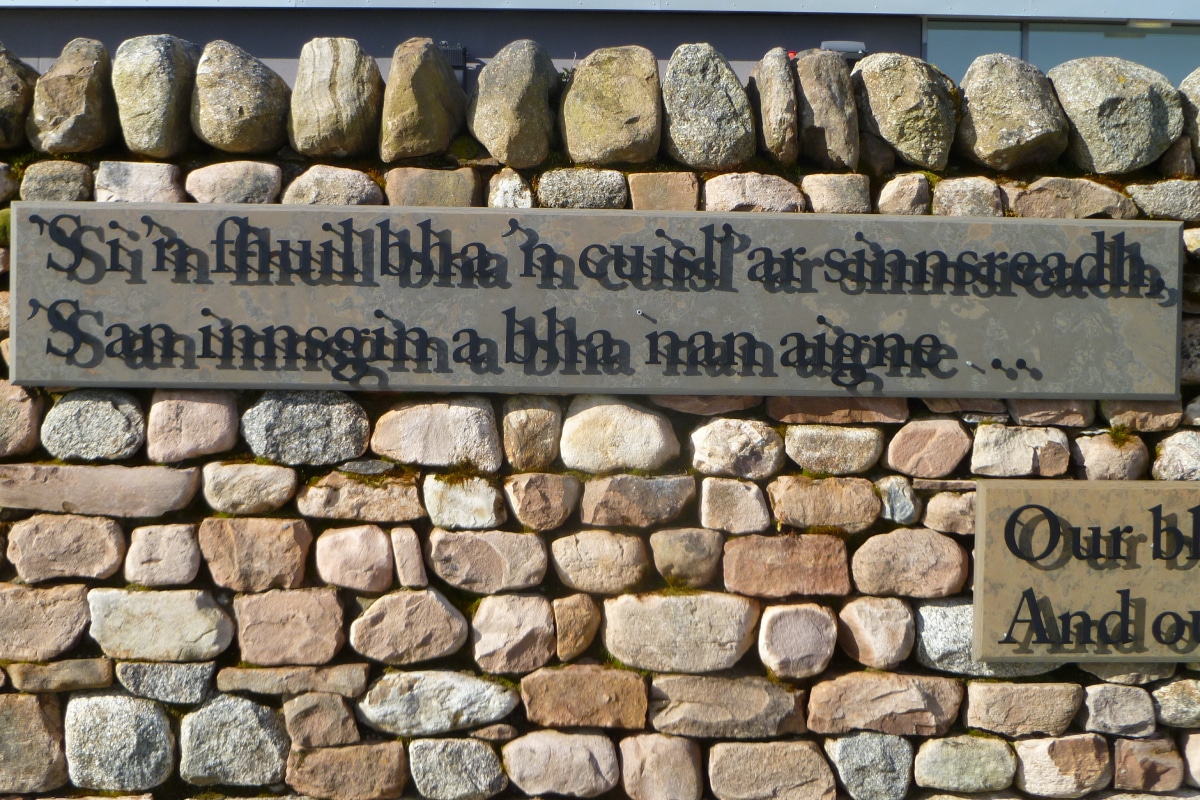
Maar ik vond het leuk een vervolg te schrijven, Fuil na Fill, waarin de geschiedenis door deze tijdreis veranderd is. Ik begaf me in het genre van Alternatieve Geschiedenis. Het was erg leuk me een keer niet (helemaal) aan de bestaande historie te moeten houden en te kunnen spelen met “wat als”. Ik ben best trots op beide boeken, zeker omdat ik me hiervoor zwaar heb moeten verdiepen in het Gàidhlig en de Schotse cultuur van rond 1700, en wilde ze dus toch op de website.
En wie weet dat ik in de verre toekomst nog een deel schrijf. Je weet maar nooit. Ik heb de boeken een laatste keer herlezen voor ik Fuil na Fill liet drukken en toen ging het toch weer kriebelen.
Wie ze lezen wil, kan zich melden, dan regelen we wat.
Salham Kronieken
En dan zijn er de vier boeken in de Salham Kronieken serie. Dit zijn voor de verandering geen historische romans, maar horen bij het Fantasy genre.
Dit is het eerste verhaal dat ik ooit schreef. Wel, niet het eerste: dat was toen ik een meisje van zes jaar oud was. Maar het was wel mijn eerste, serieuze poging tot iets groters. Het moet ergens rond 1988 geweest zijn dat ik eraan begon.
Ik was geïnspireerd geraakt door de fantasy wereld van het RPG-spel Dungeons and Dragons (D&D). Jaren was ik DM (dungeon master oftewel spelleider) en schreef er ook zelf avonturen voor, waarvan één in het magazine Dungeon gepubliceerd is. Uiteraard leunt D&D zelf weer zwaar op de wereld gecreëerd door J.R.R. Tolkien, met zijn dwergen en elven, rangers en orcs. En die romans putten weer diep uit de oerbron van Germaanse en Keltische vertellingen, sprookjes en traditionele geloven.
Het verhaal bestond uit meerdere subplots of verhaallijnen, sommige tamelijk op zichzelf staand, maar uiteindelijk wel allemaal in elkaar grijpend in een alles omvattende politieke intrige. Maar het verhaal ontwikkelde zich naar de interesse en smaak van mijn man en mijzelf en bepaalde subplots kregen steeds meer aandacht.
Op een gegeven moment besloot ik bepaalde subplots uit dit verhaal te halen en ze zelfstandig af te schrijven, maar nu als historische romans. Dus de Port Royal Serie over het boekaniersmeisje Rochette, de Steinburg Mysteriën over de middeleeuwse ridder Gwide, het fantasy-verhaal over Ghâxurzh en voor een deel ook het boek Runenjarl vinden hun ontstaansgeschiedenis in Salham.
Salham werd vergeten, omdat al mijn tijd in het voltooien van die nieuwe, historische romans ging zitten. Salham werd nooit afgeschreven.
In 2020 werden we echter getroffen door de Corona-crisis en op dat moment besloot ik dat het toch wel zonde was dat wat er nog over was van Salham, zat te verstoffen in mijn computer en dat het overkoepelende verhaal met al zijn intriges voor Piet Snot was geschreven. En dus besloot ik de extra tijd die ik nu ineens had tijdens lockdowns, te gebruiken om het af te schrijven en de gaten die er gevallen waren in het plot door de extractie van de subplots, te dichten. Na dertig jaar kwam ik eindelijk aan voltooiing toe. Wat overbleef was een lijvig fantasy-werk, dat een warm plekje in mijn hart heeft als mijn eerste echte pennenvrucht.
Het is origineel werk, hoewel ik dus leun op D&D en Tolkien. Salham is een door mij ontwikkelde wereld met een eigen cultuur, maar orcs stammen niet uit mijn fantasie. Evenmin heb ik het idee van avonturiersgroepen bedacht, bestaande uit vechters, tovenaars, priesters en dieven, die de wereld intrekken om die te verlossen van slechte sprookjeswezens.
Putten uit bestaande bronnen
Een paar keer heb ik wat meer gedaan dan leunen alleen. Soms putte ik wel heel letterlijk uit bestaande bronnen. Ik schreef ze immers niet met het oogmerk om ze uit te geven, maar voor mijn eigen plezier. Ik heb die bronnen echter wel zo authentiek mogelijk verwerkt, hoewel in een enkel geval het oorspronkelijke werk misschien nog te herkennen is. Ik had die gevallen geheel kunnen verwijderen of zodanig ombouwen dat elke herkenning onmogelijk was, maar in een enkel geval zou ik het plot en de intriges zoveel geweld aangedaan hebben, dat ik het halve boek had moeten herschrijven, of waren mijn eigen toevoegingen me te dierbaar om zomaar overboord te gooien. Daarom heb ik besloten het zo te laten, maar de boeken om die reden dus niet officieel uit te geven.
Zo beschrijft de hoofdpersoon op een gegeven moment het orc pantheon en dat is rechtstreeks zo overgenomen uit de Forgotten Realms wereld van D&D. En het lied over de soldaat in een barslechte kroeg is natuurlijk een zeer vrije vertaling (met uitgebreide eigen aanvullingen) van het Ierse lied The Waterford Boys. Hetzelfde geld voor het lied De Kr’ijnse Zwerver.
Een zeer beperkt aantal avonturen, zoals de dwergenkrocht met de ondoden, waar het avonturiersgezelschap uitgebreide hulp krijgt van allerlei rivaliserende volkeren, het verdwijnende kasteel van Salham en de berggrot met de duivels en reuzen, is gejat uit door anderen geschreven D&D avonturen.
Een andere bron was de geschiedenis zelf. En hoewel niet uiterst origineel, is het niet verboden om veld- en zeeslagen te gebruiken in een eigen verhaal, wereld, setting en met eigen personages. Zo zijn vooral een aantal slagen in Montarón gedeeltelijk ontleend aan slagen uit de Honderdjarige Oorlog, en slagen uit deze oorlog en die met Krewin uit de Engelse Burgeroorlog en de Engels-Nederlandse zeeoorlogen.
De Sharpe-serie van Bernard Cornwell is de grootste bron van ‘plagiaat’. Ik heb ideeën gestolen en verweven met het bestaande verhaal. Voor zover ik ze nog kon achterhalen, heb ik alles verwijderd. Het zou immers jammer zijn als een intrige en personages die uit mijn fantasie zijn ontsproten door dit soort beperkt jatwerk de indruk zouden wekken dat het volledig plagiaat is. Maar soms kon ik het oorspronkelijke werk nauwelijks meer herkennen of zag ik niet in hoe ik het nog uit het origineel kon halen.
Het gaat hierbij om de strijd van Marál, Vizánth en Butorin in de Smokkelaarspas in Kortánh (Sharpe’s Enemy – het gevecht in de Gateway of God) en de daaropvolgende strijd in het kustfort (Sharpe’s Siege).
En de oplettende lezer zal in de Slag op het Litteveld duidelijke overeenkomsten herkennen met de Slag in Helms Diepte uit The Lord of the Rings. Die strijd stond me zo levendig voor ogen, dat ik er op deze wijze graag hommage aan wilde geven.
Maar al met al blijft er meer dan genoeg authentiek materiaal over en bij deze heb ik de oorspronkelijke bronnen eer aangedaan en staat niets me in de weg om gewoon van dit verhaal te genieten. Zolang ik het niet commercieel uitgeef, staat het elke hobbyschrijver vrij om zich iets meer dan wellicht chic is door betere schrijvers te laten beïnvloeden en inspireren.
Als laatste struikelblok moet ik de landkaart noemen. Soms lijken de genoemde afstanden en reistijden niet te kloppen met de kaart en een andere keer weer wel. Het land komt over als vele malen groter dan de kaart zelf doet vermoeden. Maar wie zegt dat een Salhamese mijl gelijk is aan onze mijl? En waarom zouden er in zo’n magische wereld niet fluctuaties kunnen zijn in reistijden? Dus heb ik me daar verder niet om bekommerd. Soms hoeft niet alles perfect te zijn.
Ik heb dus vier boeken, die me dierbaar zijn, die in niets lijken op de door en door gerechercheerde historische romans die ik heb uitgegeven. Het zijn vrolijke, vermakelijke schrijfsels, die, als je niet let op literaire vereisten, velen toch plezier zullen geven.
Ik heb ze dus voor mezelf laten drukken, maar wederom: wie nieuwsgierig is en ze wil lezen, kan zich melden.
Lastige kaften
De kaften waren lastig.
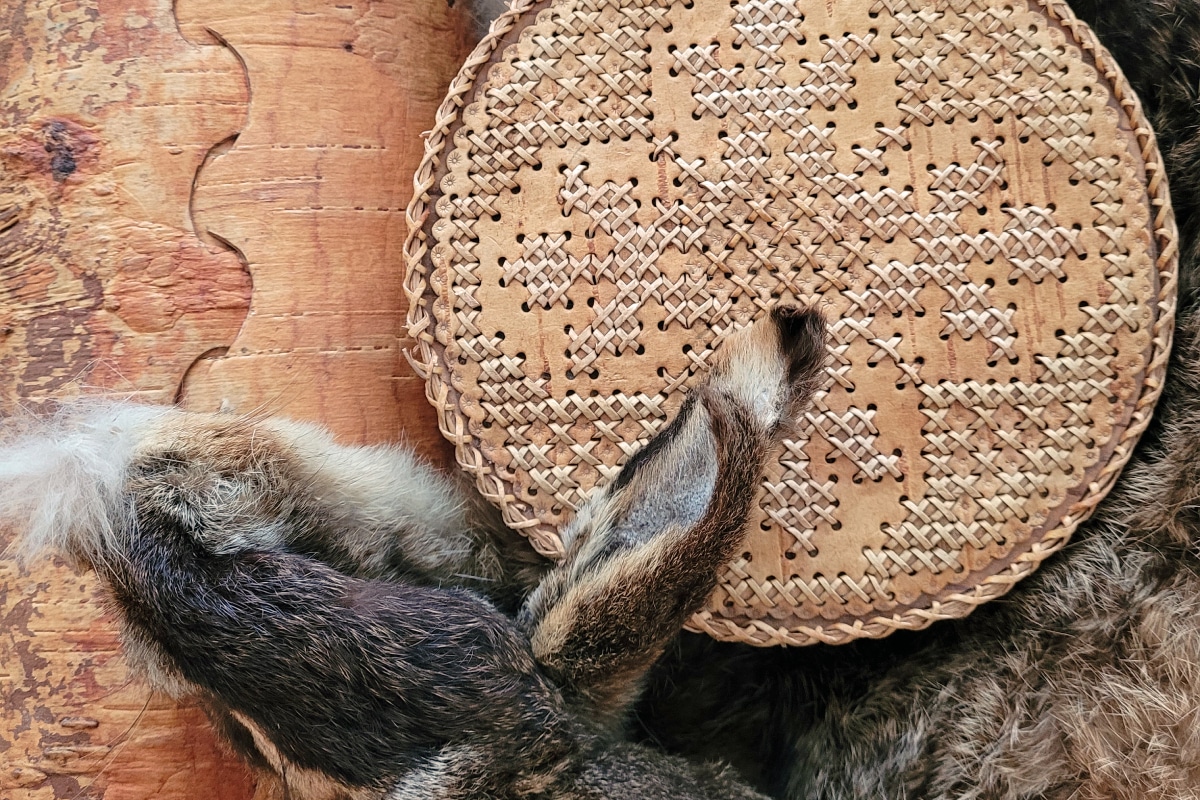
Canada Gavotte gaat over coureurs de bois (woudlopers), maar ik bezat niets wat daarmee te maken had. Ik heb online gekeken of ik iets kon kopen, maar zag alleen spullen uit de periode die zich na mijn verhaal afspeelt, dus in de tijd van de voyageurs en mountain men, of het was niet echt geschikt voor een kaft. Maar… trappers staan synoniem met bont en in mindere mate met berkenbast, waarvan hun kano’s en containers gemaakt waren. En bont en berkenbast heb ik wel! Dus zie hier de kaft die dat opgeleverd heeft. Een deel van deze kaft vormt meteen het plaatje voor bij deze blog.
Voor de Salham Kronieken heb ik het simpel gehouden: ik heb een wapenschild ontworpen voor elk land, gouw, stad en groep in de boeken en daar, weinig fantasievol, vier vergelijkbare kaften van gemaakt.
Over de kaft van Broch nam Broc heb ik al verteld in het blog van 2019. Het is een foto van een broch. Niet de beste foto, want het weer was toen miserabel, maar wel mijn foto. Voor Fuil na Fill heb ik een foto van mijn Schotlandreis gekozen zoals ik me een beetje het dal van Bran voorstel.
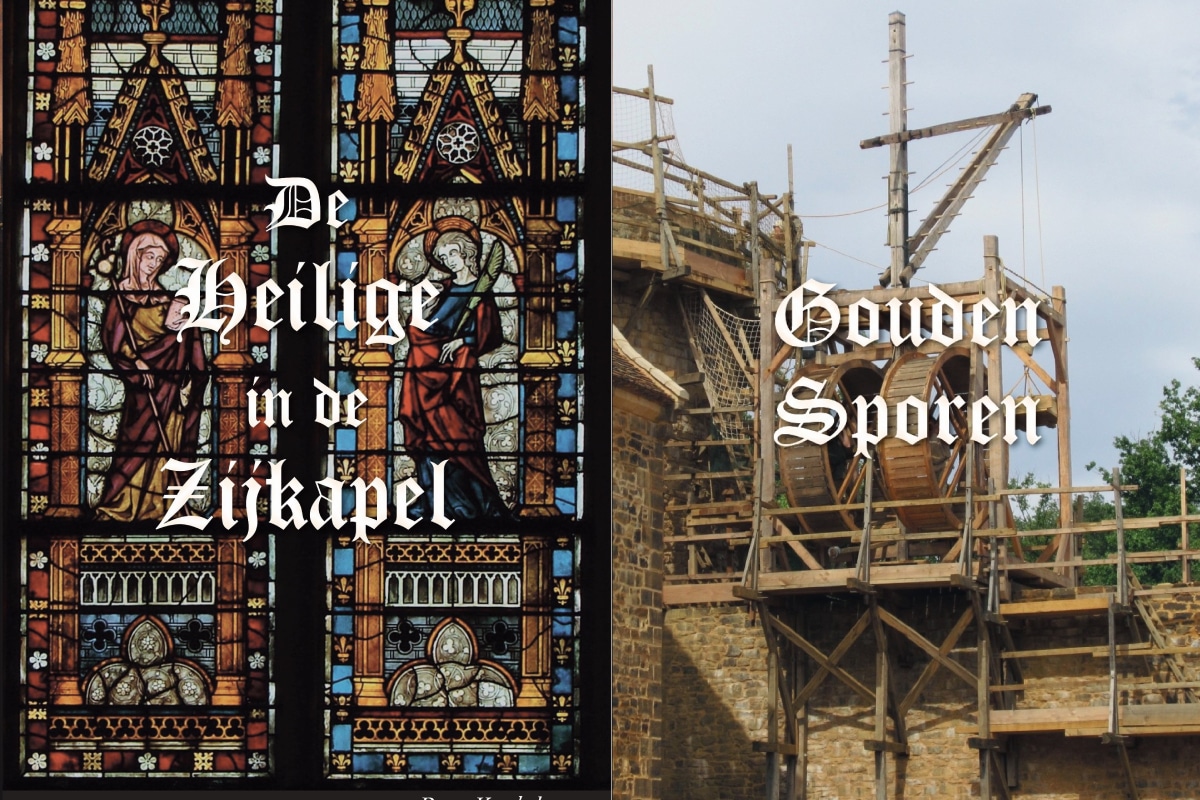
Zo. Nu ben ik (bijna) ‘bij’. Ik heb nog twee gevolgen geschreven in de serie van de Steinburg Mysteriën (De Heilige in de Zijkapel en Gouden Sporen), want dat verhaal was nog niet klaar. Op 26 augustus 1278 werd bij Dürnkrut in Oostenrijk de Slag op het Marchveld uitgevochten, de grootste ridderslag ooit. Het was in deze slag dat Ottokar II, de koning van Bohemen en de constante nemesis van Steinburg, definitief verslagen werd. Dus ik vond dat Gwides verhaal niet klaar was zonder deze slag en het einde aan de Steinburgse oorlogen met Bohemen. Dus zodoende schreef ik nog twee boeken met twee who-dunnit verhalen elk. Maar die komen later.
Trappers, fantasy & alternative history
Anyone who regularly visits my website may have noticed something by now. There are seven new books on it at once!
Seven? Yes, seven. Someone already asked me: did you write with Chat GPT?
No, not at all. I would never do that. Because writing is my hobby and what’s fun about letting a computer do it? No, these books had been finished for a long time, but had not yet been printed.
You can’t put book after book on the market, so I always make sure there is the necessary time in between. So I offer about one new book a year. But then I had already written something new, so the stock did not dwindle. And that while some of those books were not so much for sale as for personal pleasure. I wanted all my “babies” on the bookshelf. I want to have caught up and have peace of mind.
So I took one deep breath and had everything that was still on the shelf printed in one go under my own management (i.e. at my own expense). And even though some don’t have an ISBN number, I still wanted all my writings together on the website.
Coureurs de bois
The first book, Canada Gavotte – The Carcajou Brigade, is a prequel in the Kingston Dances series. With the historical novels about Damien, his father, his grandmother and great-grandfather, American history from the mid-18th century to the end of the 19th century is covered. But the “American Saga” is of course not complete without the period how it actually started: the trapper age.
My father was always interested in trappers and coureur de bois, and told me a lot about them in my youth. It was therefore super fun and very interesting to investigate. A small problem was that the trappers of the early 18th century were mainly French (and Scots) and the fur trade took place in Canada around the Great Lakes. New England was already overhunted by then and there was not much fur left to be had. The beaver had almost been eradicated by then. So Damien has been given a distant French ancestor.
Fuil na fill
In 2019 I already wrote a blog about Broch nam Broc and how I came to write it. It is a book about a Dutch brother and sister who are teleported to Scotland of around 1700. The book is dear to me, but I never officially published it, because the original concept was already invented by Gabaldon with her Outlander series. My story is fundamentally different, but I still found it too presumptuous to market it.
But I enjoyed writing a sequel, Fuil na Fill, in which history has changed through this time travel. I entered the genre of Alternative History. It was very nice not to have to stick (completely) to the existing history for once and to be able to play with “what if”. I am quite proud of both books, especially because I had to delve heavily into Gàidhlig and Scottish culture from around 1700, so I wanted them on the website anyway.
And who knows, maybe I’ll write another sequel in the distant future. You never know. I reread the books one last time before I had Fuil na Fill printed and then it started itching again.
Anyone who wants to read them can message me, and we’ll arrange something.
Salham Chronicles
And then there are the four books in the Salham Chronicles series. For a change, these are not historical novels, but belong to the Fantasy genre.
This is the first story I ever wrote. Well, not the first: that was when I was a six-year-old girl. But it was my first, serious attempt at something bigger. It must have been somewhere around 1988 that I started it.
I was inspired by the fantasy world of the RPG game Dungeons and Dragons (D&D). For years I was DM (dungeon master) and also wrote adventures for it myself, one of which was published in the magazine Dungeon. Of course, D&D itself leans heavily on the world created by J.R.R. Tolkien, with its dwarves and elves, rangers and orcs. And those novels in turn draw deeply from the primordial source of Germanic and Celtic stories, fairy tales and traditional beliefs.
The story consisted of several subplots or storylines, some fairly self-contained, but ultimately all interlocking in an all-encompassing political intrigue. But the story developed according to the interests and tastes of my husband and myself and certain subplots got more and more attention.
At one point I decided to take certain subplots from this story and finish them independently, but now as historical novels. So the Port Royal Series about the buccaneer girl Rochette, the Steinburg Mysteries about the medieval knight Gwide, the fantasy story about Ghâxurzh and partly also the book Runenjarl find their origin in Salham.
Salham was forgotten, because all my time was spent completing those new, historical novels. Salham was never finished.
In 2020, however, we were hit by the Corona crisis and at that moment I decided that it was a shame that what was left of Salham was gathering dust in my computer and that the overarching story with all its intrigue was written for Jack Shit. And so I decided to use the extra time that I suddenly had during lockdowns to finish them and close the gaps that had fallen in the plot due to the extraction of the subplots. After thirty years, I finally got around to completion. What remained was a bulky fantasy work, which has a warm place in my heart as my first real fruit of the quill.
It’s original work, although I lean on D&D and Tolkien. Salham is a world developed by me with its own culture, but orcs do not stem from my imagination. Nor did I come up with the idea of adventurous groups, consisting of warriors, wizards, clerics and thieves, who go out into the world to rid them of evil fairytale creatures.
Drawing from existing sources
A few times I did a little more than just lean. Sometimes I drew very literally from existing sources. After all, I did not write them with the intention of publishing them, but for my own pleasure. However, I have processed those sources as authentically as possible, although in a few cases the original work may still be recognizable. I could have removed those cases completely or rebuilt them in such a way that any recognition was impossible, but in a few cases I would have violated the plot and the intrigue so much that I would have had to rewrite half the book, or my own additions were too dear to me to just throw overboard. That’s why I decided to leave it as it is, but not to officially publish the books for that reason.
For example, at one point the main character describes the orc pantheon and that is taken directly from the Forgotten Realms world of D&D. And the song about the soldier in a terrible pub is of course a very free translation (with extensive additions of my own) of the Irish song The Waterford Boys. The same goes for the song De Kr’ijnse Zwerver.
A very limited number of adventures, such as the dwarven cave with the undead, where the adventurer party receives extensive help from all kinds of rival peoples, the disappearing castle of Salham and the mountain cave with the devils and giants, have been stolen from D&D adventures written by others.
Another source was history itself. And although not extremely original, it is not forbidden to use field and naval battles in your own story, world, setting and with your own characters. In particular, a number of battles in Montarón are partly derived from battles from the Hundred Years’ War, and battles from this war and the battles with Krewin from the English Civil War and the Anglo-Dutch naval wars.
Bernard Cornwell’s Sharpe series is the biggest source of ‘plagiarism’. I stole ideas and intertwined them with the existing story. As far as I could still trace them, I deleted everything. After all, it would be a shame if an intrigue and characters that have sprung from my imagination would give the impression that this kind of limited stealing is completely plagiarism. But sometimes I could hardly recognize the original work or I didn’t see how I could get it out of the original.
This is the case with the battle of Marál, Vizánth and Butorin in the Smugglers’ Pass in Kortánh (Sharpe’s Enemy – the battle in the Gateway of God) and the subsequent battle in the coastal fortress (Sharpe’s Siege).
And the attentive reader will recognize clear similarities in the Battle of the Litteveld with the Battle of Helm’s Deep from The Lord of the Rings. That struggle was so vivid in my mind that I wanted to pay homage to it in this way.
But all in all, there is more than enough authentic material left and with this one I have honoured the original sources and nothing stands in the way of me just enjoying this story. As long as I don’t publish it commercially, every hobby writer is free to be influenced and inspired by better writers a little more than is perhaps chic.
As a final stumbling block, I have to mention the map. Sometimes the distances and travel times mentioned do not seem to match the map and other times they do. The country comes across as many times larger than the map itself suggests. But who says a Salhamese mile is equal to our mile? And why shouldn’t there be fluctuations in travel times in such a magical world? So I didn’t worry about that any further. Sometimes not everything has to be perfect.
So I have four books, which are dear to me, which are nothing like the thoroughly researched historical novels that I have published. They are cheerful, entertaining writings, which, if you don’t pay attention to literary requirements, will still give pleasure to many.
So I had them printed for myself, but again: anyone who is curious and wants to read them can message me.
Difficult covers
The covers were difficult.
Canada Gavotte is about coureurs de bois (trappers), but I didn’t own anything related. I looked online to see if I could buy something, but only saw stuff from the period that takes place after my story, so in the time of the voyageurs and mountain men, or it wasn’t really suitable for a cover. But… trappers are synonymous with fur and to a lesser extent with birch bark, from which their canoes and containers were made. And I do have fur and birch bark! So here is the cover that was the result of that. Part of this cover also forms the picture for this blog.
For the Salham Chronicles I kept it simple: I designed a coat of arms for each country, shire, city and group in the books and, not very imaginatively, made four similar covers.
I already told you about the cover of Broch nam Broc in the blog of 2019. It is a photo of a broch. Not the best photo, because the weather was miserable then, but it is my photo. For Fuil na Fill I have chosen a photo of my Scotland trip as I imagine the valley of Bran.
So. Now I am (almost) ‘up to speed’. I wrote two more sequels in the series of the Steinburg Mysteries (The Saint in the Side Chapel and Golden Spurs), because that story was not finished yet. On August 26, 1278, the Battle of the Marchfield was fought at Dürnkrut in Austria, the largest knigh battle ever. It was in this battle that Ottokar II, the king of Bohemia and the constant nemesis of Steinburg, was definitively defeated. So I felt that Gwide’s story would not be finished without this battle and the end of the Steinburg Wars with Bohemia. So that’s why I wrote two more books with two who-dunnit stories each. But they will come later.
Comments (0)